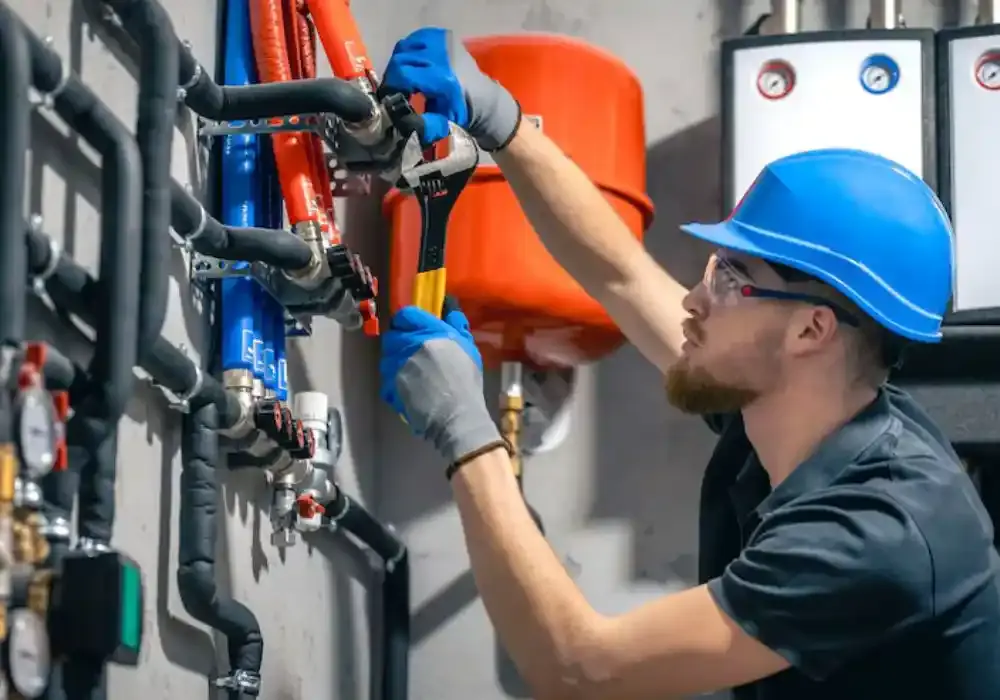
No Heat or a Gas Smell? Read This Before You Call
No-heat and gas smell calls are urgent in New Jersey winters, because a cold house puts pipes, children and older residents at risk. Start with safety, then work toward heat.
- If you smell gas, leave the building with everyone in it. Do not flip switches or use a phone inside. Call the gas utility or 911 from outside.
- If a carbon monoxide alarm sounds, go outside and call 911. Do not reset it and go back in.
- If the boiler is leaking water, shut off its power switch and close the water feed to the boiler.
- If the relief valve is discharging steam or hot water, keep clear and call us.
- If the house is cold but there is no smell and no alarm, check the thermostat, the power switch, the water pressure gauge and the fuel supply, then call us.
Tell the dispatcher what type of heat you have, such as radiators, baseboard or steam, and what the boiler is doing. It helps us bring the right parts.
Boilers in Older Hawthorne Homes
Census estimates put the median home at 1953, and about 60 percent of Hawthorne's housing units were built before 1960. Homes of that age are commonly heated with hot water radiators or baseboard, and some with steam, and many have a boiler that has been replaced at least once. Ask which kind you have, because the repair differs.
Snowfall in the area runs 30 to 40 inches a year by the borough's own records, so a failed boiler in a cold snap does not wait. If you rent a unit in a two-family house, tell your landlord the moment the heat goes, since about one housing unit in four here is in a two-unit building.
Hot Water Boilers and Steam Boilers
The two systems look alike from the basement, but they fail differently.
Hot water (hydronic)
- Pump circulates hot water to radiators or baseboard.
- Common faults: air in the lines, a failed circulator, a stuck zone valve, low system pressure.
- Needs correct fill pressure and a healthy expansion tank.
- Bleeding radiators is homeowner-safe once the boiler is off.
Steam
- Boiler makes steam that rises to radiators.
- Common faults: low water, a clogged sight glass, a bad pressure control, banging pipes.
- Needs water at the right level and a working low water cutoff.
- Never add water to a hot, empty steam boiler.
Safety Devices That Must Work
Two parts are there to prevent a boiler from becoming dangerous. We test them on every visit.
Pressure relief valve
It opens if pressure climbs too high. A valve that drips or discharges means something is wrong, and the valve should never be capped or plugged.
Low water cutoff
It shuts the burner when the water is too low. A boiler that fires without enough water can crack. We clean and test the cutoff, and replace it if it is slow.
Thermostat and aquastat
These tell the burner when to start and stop. A failed one can leave you cold or let the boiler run too hot.
Flue and draft
Combustion gases must leave the house. We check the flue, the draft and the combustion for signs of leaks or soot.
Expansion tank
On a hot water system it absorbs pressure swings. A waterlogged tank makes the relief valve weep.
Carbon monoxide alarm
An alarm near the boiler room and bedrooms is a basic safeguard. Test it often.
Common Boiler Symptoms and Causes
Here is how we think about the symptoms we hear most.
| Symptom | Likely cause | What we check |
|---|---|---|
| No heat, boiler silent. | No power, tripped limit or no fuel. | Switch, thermostat, gas supply, ignition. |
| Boiler runs, house stays cold. | Air in lines, failed circulator or zone valve. | Pump, zones, system pressure. |
| Banging or knocking. | Air or water hammer, scale in the heat exchanger. | Bleed, flush, check water level. |
| Water on the floor. | Leaking valve, fitting or heat exchanger. | Trace the source and test pressure. |
| Relief valve dripping. | High pressure or failed expansion tank. | Gauge, tank charge, valve condition. |
Boiler trouble often goes along with hot water supply problems. If your domestic hot water is also failing, our water heater repair page covers the tank side. A hot water line running through a wall may need leak detection before we close it up.
What Happens on a Boiler Call
Check safety first
We confirm there is no gas leak or carbon monoxide, then test the relief valve and low water cutoff.
Find the fault
We test power, ignition, circulation and pressure, and name the part that failed.
Repair and run
We replace the part, restore heat and run the boiler through a full cycle.
Explain the next step
If the unit is past repair, we tell you plainly and discuss replacement.
What Boiler Repair Costs
Boiler faults range from a reset to a major component. After we test, you get a clear price before work starts.
If boiler damage affects your home, ask your insurer what they need to see. We can describe the work in writing, and the coverage decision stays with your insurer.
Cold Snaps and the Neighborhood
A dead boiler in a cold snap raises a second risk. Water in a cold basement can freeze and split pipes, and the damage often shows up later as a leak. If you must leave the house, shut off the water at the main and drain the lines, then call us.
Our Wagaraw Road base serves the borough and towns like North Haledon, where older homes face the same winter problem.
Common Questions
Yes. The 24/7 line takes calls on nights, weekends and holidays. A no-heat call in winter is treated as urgent, and a gas smell comes before everything else.
Leave the building right away with everyone inside. Do not touch switches, use a phone or try to find the source. Call the gas utility or 911 from outside, then call us once it is safe.
It can mean pressure is too high, the expansion tank has failed, or the valve itself is worn. Do not cap it. Call us to find the cause and replace the valve if needed.
It shuts the burner when water falls below a safe level, so the boiler does not fire dry. A stuck or dirty cutoff can fail without warning, so it should be tested every year.
Yes. Steam systems depend on correct water level, working controls and clean piping. We diagnose each of these and will tell you if the boiler is past repair.
Air in the lines, a failed circulator or a stuck zone valve are common causes. Check the pressure gauge and bleed the radiators only after the boiler is off. If heat does not return, call us.
Local figures on this page come from U.S. Census Bureau American Community Survey estimates. Check current numbers with those sources before you rely on one.