Disposal Jammed or Leaking? Safe Steps First
A garbage disposal can injure you and can leak into the cabinet, so the first step is always to cut power.
- Turn off the wall switch, then unplug the disposal or shut off its breaker before reaching for anything.
- Never put a hand into the grinding chamber, even with the power off. Use tongs or pliers.
- If water is leaking under the sink, close the shutoffs and empty the cabinet.
- If the sink is full of dirty water, stop running the tap and the dishwasher.
- Keep outlets and cords out of any standing water and call the 24/7 line.
A disposal that hums but does not spin is usually jammed, not dead. Many have a reset button on the bottom, and pressing it after a few minutes can help once the jam is cleared.
How We Clear a Jammed Disposal
Power off and inspect
We confirm the power is off, then look into the chamber with a light and tongs.
Free the flywheel
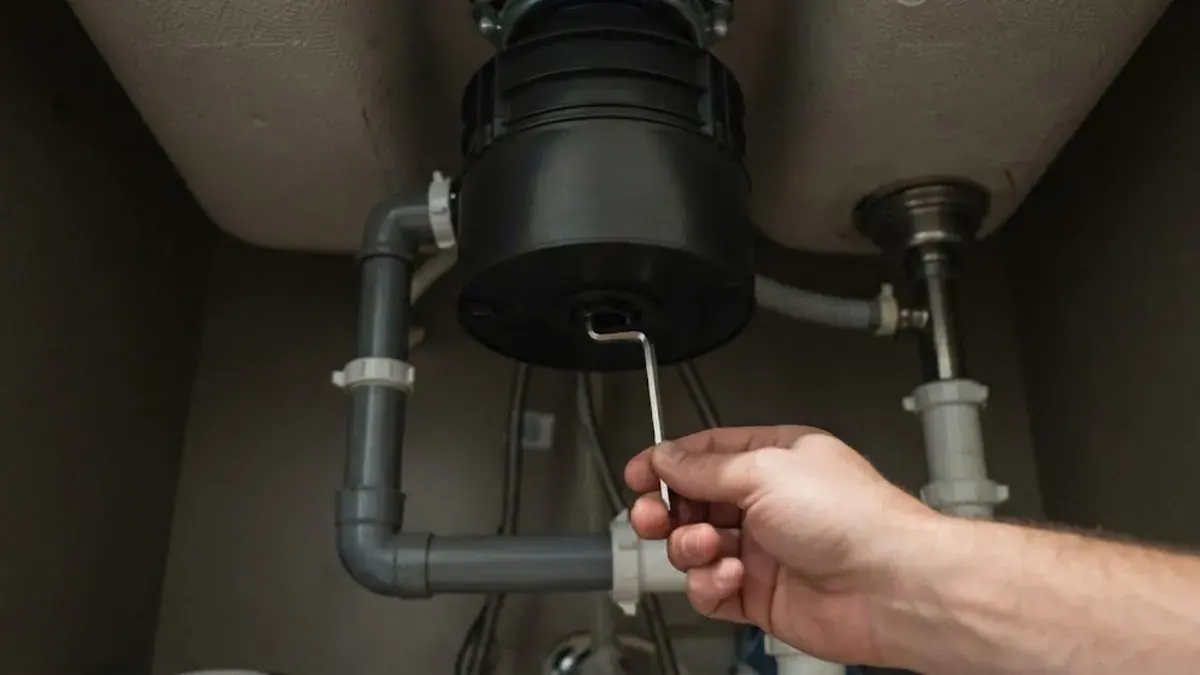
Most jams come from bones, fruit pits or a spoon. We turn the flywheel by hand from the bottom with a hex key, then remove the object.
Test and reset
We reset the overload, run water and test the grind. If the motor is burnt out, we explain replacement.
Disposal Problems We Fix
Most disposal calls fall into a few patterns, and each one points to a different repair.
Jams and humming
A hum with no spin means a stuck flywheel. Clearing it often restores the unit unless the motor has overheated.
Leaks at the top
A leak at the sink flange comes from old plumber's putty or a loose mounting ring. We reseat the flange and re-seal it.
Leaks at the side or bottom
A leak from the unit body, the dishwasher inlet or the discharge pipe often means a failed seal or a cracked housing. A cracked housing means replacement.
Slow draining sink
The disposal drains into the same trap as the sink. A slow disposal often means a partial clog past the unit.
Bad smells
Food buildup on the underside of the splash guard and baffle can smell. We clean and test the drain.
Garbage Disposal Installation and Wiring
Installing a new disposal means removing the old unit, mounting the new one under the sink flange, and connecting the discharge to the drain. We also connect the dishwasher drain hose, and knock out the dishwasher plug in the disposal inlet if one is needed.
Most home disposals plug into an outlet under the sink, controlled by a wall switch. If no outlet exists, a licensed electrician needs to add one, and we coordinate the plumbing around that work. Wiring is not something to improvise near water.
Tell us the horsepower you want and how heavily you use the kitchen. A larger family does well with a stronger unit that handles more food waste.
Double Sink Drain and Disposal Setup
A double bowl sink needs the disposal and the second bowl to drain together without backing up.
Disposal on one bowl
- The disposal discharges into a continuous waste tee.
- The second bowl drains into the same tee.
- The dishwasher hose connects at the disposal inlet.
- The trap sits after the tee.
Check these details
- The drain slope is correct so water does not stand.
- A high loop on the dishwasher hose stops backflow.
- The tailpiece lengths line up without strain.
- The trap is not too far from the wall stub.
What Disposal Repair and Installation Costs
We diagnose first. If a jam or a seal is the problem, repair costs less than replacement, and you get a clear price before work starts.
If a leak caused cabinet or floor damage, ask your insurer what documentation they need. We can describe the work in writing, and coverage decisions stay with your insurer.
Disposal Symptoms and What They Mean
Use this table to judge how serious a symptom is before you call.
| Symptom | Likely cause | Safe first step |
|---|---|---|
| Hum, no spin. | Jammed flywheel | Power off, then use the hex key from below. |
| Nothing happens | Tripped overload or no power. | Press reset, check the breaker. |
| Water under the sink. | Seal, flange or housing leak. | Close the shutoffs and call. |
| Gurgling or slow sink. | Partial clog past the unit. | Stop using the sink and call. |
| Loud grinding | Foreign object in the chamber. | Power off, remove it with tongs. |
For a clog beyond the disposal, our drain cleaning service can clear the line.
Hawthorne Kitchens and Disposal Wear
Hawthorne's housing is older than most of New Jersey, with a median build year of 1953. Many kitchens in those homes have original cast iron or galvanized drain stubs behind the cabinet. A disposal puts extra load on that pipe, so we inspect the stub and trap before fitting a new unit.
About one housing unit in four is in a two-unit building, and kitchens there often share a stack. If your neighbor's sink backs up when yours drains, tell us on the call. That points to the shared line, not the disposal.
Hard water, roughly 236 to 278 ppm at several plants, leaves scale on grinding parts and seals. It does not ruin a disposal, but it is one reason older units start to leak.
Beyond the Disposal
If your sink leaks for reasons other than the disposal, see our faucet repair page. We also help homeowners in North Haledon with kitchen plumbing, and the 24/7 line is the fastest way to reach us.
Common Questions
Yes. Our 24/7 line takes calls on evenings, weekends and holidays. A disposal leaking into a cabinet or a kitchen sink that will not drain is an emergency at any hour.
No. Turn off the power at the switch and unplug it or kill the breaker first. Even then, use tongs or pliers, not your hand.
The flywheel is usually jammed. A hex key in the bottom socket can free it, and then you can press the reset button. If it hums again, the motor may be failing.
Yes. We connect the second bowl through a continuous waste tee, attach the dishwasher drain, and test for leaks and slope.
We install units that plug into an outlet under the sink. If that outlet or a switch is missing, a licensed electrician adds it and we complete the plumbing connection.
A leak at the top flange can often be fixed by reseating it. A leak from the housing means the unit is finished and replacement is the right call.
Local figures on this page come from the Hawthorne Water Department's 2026 Water Quality Report and U.S. Census Bureau American Community Survey estimates. Check current numbers with those sources before you rely on one.