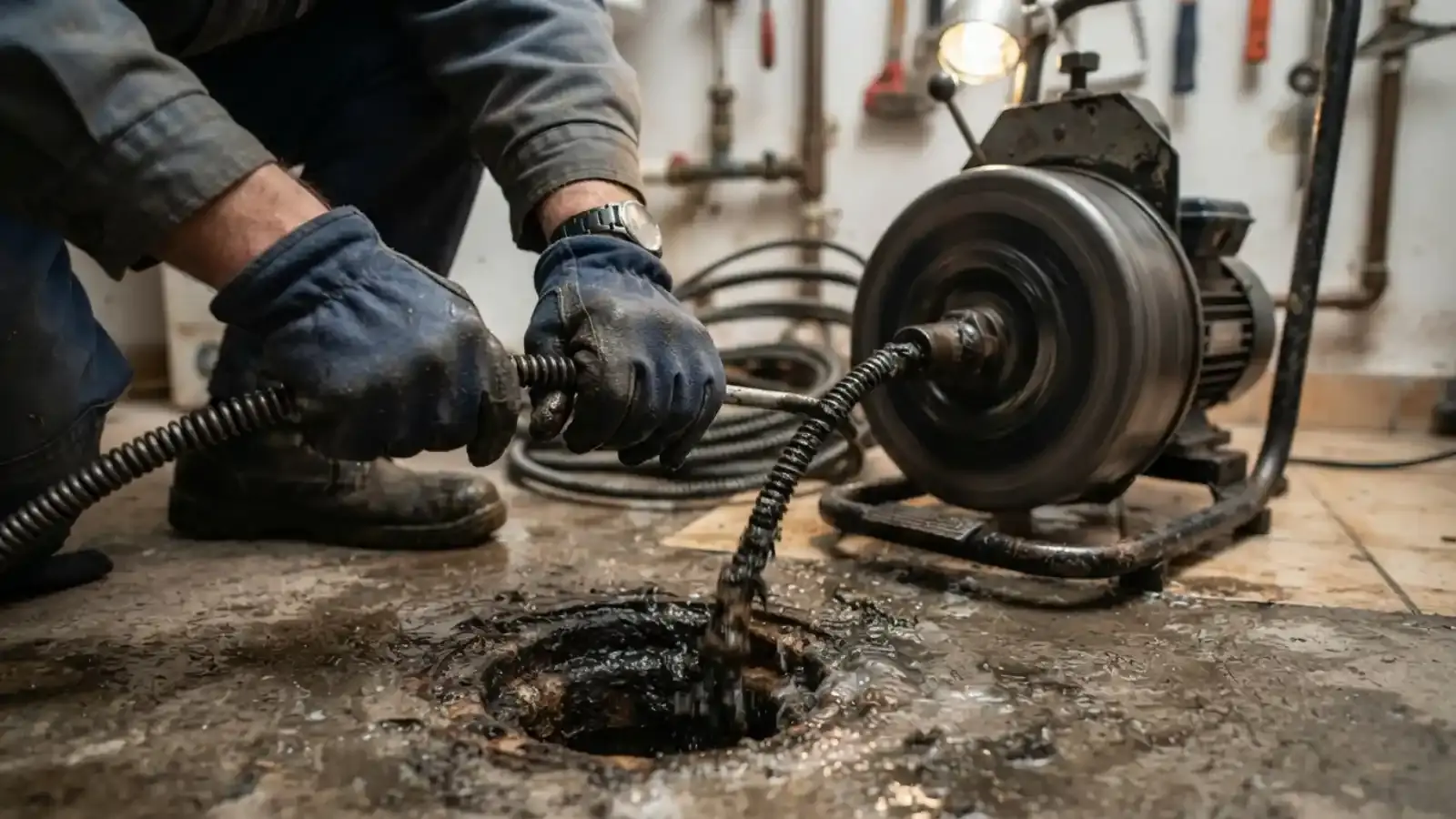
Main Line Blocked: What to Do Right Now
Stop adding water
Hold off on laundry, showers, dishwashers and toilet flushing so the line does not fill faster.
Protect the basement
Move stored items off the floor near the drain and keep children and pets out of any wet area.
Call the 24/7 line
Tell us which fixtures are slow or backing up so we send the right machine.
Sewage Safety Before We Arrive
Raw sewage carries bacteria, and standing water in a basement can hide electrical hazards. A few precautions protect you until the line is clear.
- Keep out of standing sewage and do not wade through it barefoot.
- Stay away from outlets, the electrical panel and appliances in the wet area.
- Do not mix chemical drain cleaners with sewage water.
- Ventilate if possible, and leave the house if the odor is strong or anyone feels sick.
- If water reaches electrical equipment, leave and call 911 from outside.
After the line is cleared, wash any contact surfaces with household disinfectant and run water to flush the traps.
What Blocks a Sewer Line
Most main line blockages come from a few sources. Roots enter at joints and grow into a mat, and grease and wipes pile up in a low spot. Scale on old cast iron narrows the pipe, and a collapsed section stops flow completely.
Knowing the cause matters because it decides whether cleaning is enough. A line choked by grease or wipes may stay clear for a long time, while a line fed by roots will block again without a repair at the joint.
How We Clear a Main Line
Different blockages call for different tools. We choose based on pipe size, material and what the camera or cable feels.
Mainline machine
A large drum machine drives a heavier cable through four-inch pipe to open a full stoppage.
Root cutting heads
Blade and chain cutters trim roots back to the pipe wall so flow returns.
Scraper and spring heads
Used on scale and heavy deposits to restore the pipe diameter.
High-pressure water
Follows the cable to scour the wall, covered in our hydro jetting work.
Camera follow-up
A quick view after clearing confirms the pipe is open and shows the cause.
Cleanouts: The Door to Your Sewer Line
A cleanout is a capped pipe that gives direct access to the sewer line. It is usually in the basement near the wall where the line leaves the house, or outside near the foundation. Finding yours before a backup saves time.
If there is no cleanout, we may need to pull a toilet or work through a roof vent, which takes longer and costs more. Installing a cleanout is a sensible upgrade after a blockage because it makes every later service easier.
Cleaning Methods and Where They Fit
Here is how the common methods compare for main line work.
| Method | Best for | Limit | Follow-up |
|---|---|---|---|
| Mainline cable | Full stoppage in four-inch pipe. | Leaves some coating on the wall. | Camera if it returns. |
| Root cutter | Roots at joints or in a mat. | Roots regrow | Joint repair or scheduled cleaning. |
| Hydro jet | Grease, scale and soft debris. | Not for collapsed pipe. | Camera check |
| Hand tools at cleanout. | Shallow plug near the access. | Reach is short. | Machine if it fails. |
If the blockage is a symptom of damaged pipe, see sewer line repair.
What Sewer Line Cleaning Costs
We give you a clear price before work starts. A main line job varies with access and the cause, so we confirm what we find first.
If a covered event caused the backup, ask your insurer what documentation they need. We can describe the work in writing, and coverage decisions belong to your insurer.
Hawthorne Housing, Roots and Rain
Census estimates put the median Hawthorne home at 1953, and about 60 percent of units were built before 1960. Clay and cast iron lines from that era are common, and clay joints let roots in. If your main blocks twice in a year, root intrusion is a likely cause and a camera look is worth it.
Heavy rain adds stress. The borough's inventory records Henri flooding along parts of Lafayette Avenue, Rea Avenue and Wagaraw Road on August 22, 2021. If your line backs up after storms, tell us because infiltration or a damaged joint may be involved.
Keeping the Line Clear Afterward
Do not flush wipes, even those labeled flushable, and keep grease out of the sink. Scheduled cleaning can make sense for lines with roots. After a second blockage, a sewer inspection will tell you whether cleaning will hold or a repair is the better route.
Service Beyond the Borough
We dispatch from Hawthorne to nearby towns including Glen Rock. The 24/7 line is the fastest way to reach us.
Common Questions
Yes. Our line is open 24/7, including evenings, weekends and holidays. A blocked main with sewage rising is an emergency at any hour.
Multiple fixtures drain slowly or back up together, and the lowest drain, often in the basement, shows it first. Gurgling toilets and sewage odor are also signs.
It restores flow, but roots grow back if they have a way into the pipe. A camera shows where they enter, and sealing or repairing that joint is the lasting fix.
Look in the basement near where the main leaves the house, or outside near the foundation. It is a capped pipe, often with a square or round plug. If you cannot find it, tell us and we will look.
No. Chemicals sit in standing sewage and can burn skin or hurt the pipe. They also make the job unsafe for the plumber.
It depends on the cause. A line with no recurring problem may never need it, while a line with roots may need regular visits. Your camera footage helps set a schedule.
Local figures on this page come from the borough's Environmental Resource Inventory and U.S. Census Bureau American Community Survey estimates. Check current numbers with those sources before you rely on one.