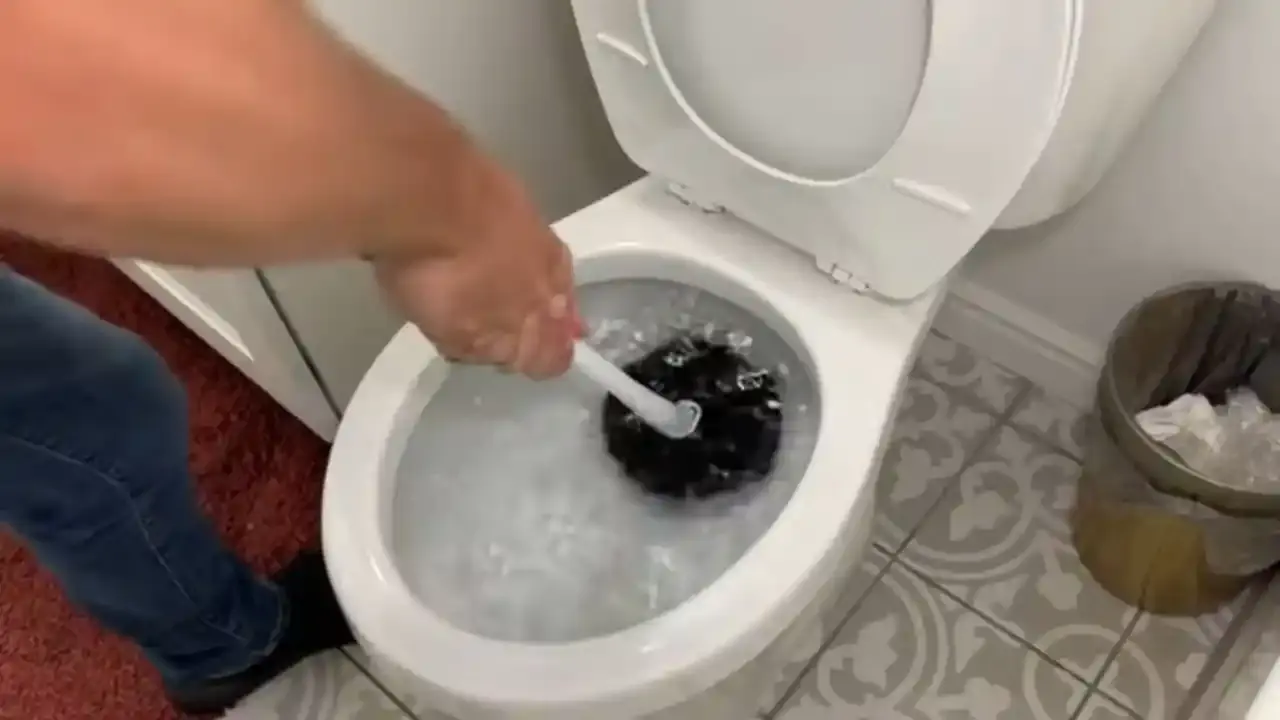
Why a Second Flush Is the Wrong Move
A toilet tank holds enough water to fill the bowl and push waste through the trap. When the trap is blocked, that water has nowhere to go but over the rim. A second flush on a stopped bowl is the most common reason a small clog becomes a wet bathroom floor.
Watch the water level for a few seconds after the first flush. If it sits high and drops slowly, the blockage is partial and the line is still moving. If it holds at the rim or creeps up, the line is fully blocked and you should stop everything.
The one exception is a bowl that has drained down to normal level. In that case one more flush is a fair test, but keep your hand ready on the flapper in case the water rises again.
Stop an Overflow Before It Starts
Act on the water, not on the clog. These steps take under a minute and protect your floor.
- Lift the tank lid and press the rubber flapper down firmly so no more water enters the bowl.
- Turn the shutoff valve on the wall or floor behind the toilet clockwise until it stops. That cuts the supply to the tank.
- Put towels around the base and keep children and pets out of the room.
- Do not touch outlets, power strips or extension cords near standing water. If water reaches an outlet, turn off power to that room at the panel only if you can reach it dry.
- Stop running other fixtures until you know whether the blockage is in the toilet or the main line.
Sewage water carries bacteria. Wear gloves, wash your hands well afterward, and keep wet towels away from the kitchen.
Water level still rising?
Stop flushing, close the supply valve and call us. We can walk you through it while we head over.
Bowl Clog or Drain Clog? How to Tell
Most toilet clogs sit in the trap, which is the curved passage built into the fixture. These respond well to a plunger. A drain clog sits farther down and affects more than the toilet.
Test by looking at other fixtures. Run the bathroom sink for a moment and check whether the tub gurgles or drains slowly. Look at the lowest drain in the house, usually in the basement.
If only this toilet is slow, work on the toilet. If a tub, a sink or a floor drain also gurgles, the blockage is in a branch or the main line, and plunging the bowl will not fix it.
What the Symptoms Usually Mean
Use this table to match what you see with the likely location of the problem.
| What you see | Likely cause | What to do first |
|---|---|---|
| Bowl fills, drains slowly, then clears. | Partial clog in the trap. | Plunge with a flange plunger. |
| Bowl stays high and does not move. | Full blockage in the trap or closet bend. | Stop the flow and plunge or call. |
| Gurgling in the tub when you flush. | Branch line or vent trouble. | Stop using water and call. |
| Basement floor drain bubbles. | Main line blockage. | Stop all water and call at once. |
| Toilet clogs every few days. | Low-flow bowl, scale or a damaged line. | Book a camera check. |
| Toy, wipe or brush went down. | Solid object in the trap. | Do not flush, plunge gently or call. |
A pattern is more useful than a single event. One clog after a heavy load is normal, but weekly clogs mean something in the plumbing needs attention.
How to Use a Plunger Properly
A flange plunger, the kind with a rubber sleeve that folds out, seals the drain opening far better than a flat sink plunger.
Seal the opening
Add water to the bowl if it is low so the cup is covered. Fit the flange into the drain hole and press down until the cup seals.
Push and pull with the wrist
Make the first stroke gentle to push out trapped air. Then use steady strokes for about 15 to 20 seconds, keeping the seal tight.
Check the result
Pull away on an upstroke. If the water drops quickly, pour in a bucket of warm tap water to confirm the flow, then flush once.
Mistakes That Make a Clog Worse
Chemical drain cleaners are the most common one. In a full bowl the liquid sits in standing water, can burn skin, and gives the plumber a hazard to deal with later. It also does little to a trapped wipe or a toy.
Never push a coat hanger or a long rod into the drain. Porcelain scratches easily, and a rod can wedge an object tighter or damage the wax ring that seals the toilet to the floor.
Flushable wipes are another common cause. The label says flushable, but wipes do not break down the way paper does and they collect in older pipes. Put them in the wastebasket instead.
What Hawthorne Homes Add to the Toilet Question
Census estimates put the median Hawthorne home at 1953, and about 60 percent of the borough's housing units were built before 1960. Older homes often still have original cast iron or clay drain lines, and those rough inner walls catch paper and wipes. If your toilet clogs more than once a season, mention the age of your house when you call, because a line problem is more likely than a bad toilet.
The borough's water quality report lists hardness around 236 to 278 ppm at several plants, which is hard water. Scale can build up in the trap and the rim jets of an older toilet, so flushing power slowly fades. A plumber can check this before suggesting a replacement.
Flooding also matters here. The borough's own inventory records Tropical Storm Henri on August 22, 2021 flooding Lafayette Avenue, Rea Avenue and Wagaraw Road, followed by 6.28 inches of rain from Ida on September 1, 2021. If your toilet or basement drain backs up only during heavy rain, do not keep flushing. That pattern points to a stressed sewer line, and the fix is not at the toilet.
When to Stop and Call a Plumber
Call a plumber instead of continuing to plunge in any of these cases.
- More than one fixture is slow or gurgling.
- Water or sewage rises in a tub, shower or basement drain.
- You have plunged properly several times and the water level does not move.
- You know a solid object went down, such as a toy, a brush or a razor.
- The toilet rocks, leaks at the base or smells of sewage even when it is not clogged.
- The same toilet has clogged several times in recent weeks.
For a toilet that keeps clogging or leaking, our toilet repair service starts with a test of the bowl and the branch line before anything is pulled. For a blockage that reaches the other drains, see our drain cleaning page.
Habits That Keep a Toilet Flowing
Toilet paper and human waste are the only things the system is built to handle. Cotton balls, floss, hair, cat litter and paper towels all belong in the trash. A small covered wastebasket in each bathroom helps guests who are unsure.
If you have low-flow toilets, use less paper per flush and flush twice for large loads, with a pause between flushes so the tank refills. Check the flapper every so often. A flapper that closes early gives a weak flush and causes repeat clogs.
Neighbors in Glen Rock and Fair Lawn call us for the same bathroom problems, so the advice applies on both sides of the Hawthorne line.
Common Questions
Only if the bowl has drained back to its normal level on its own. Even then, keep a hand on the flapper so you can stop the flow if the water climbs. If the level stays high or rises, do not flush at all.
Sometimes a soft clog loosens and drains slowly, but waiting does not clear a solid object or a wipe wad. Shut off the supply valve and do not let anyone use the toilet. Try the plunger in the morning, and call a plumber if the level has not moved.
Warm tap water with a squirt of dish soap can help a paper clog slide through. Avoid boiling water, because it can crack a porcelain bowl. Let the soap sit for about 15 minutes before plunging.
It becomes one when the water is rising, when other fixtures also back up, or when sewage reaches the floor. In those cases stop all water use and call a plumber on the 24/7 line. A single slow toilet with a working second bathroom can usually wait until a same-day appointment when available.
A quick repeat means the blockage was only moved, not cleared, or that it sits farther down the line. Try one more careful round, and if it fails again stop. A plumber can use a closet auger or a drain machine and check for a deeper cause.
Usually not. A backup that appears only in heavy rain points to the sewer line, because groundwater and storm flow can load older pipes in the borough. Stop flushing during the storm, keep the area dry, and ask a plumber for a camera check of the line once the weather clears.
Local figures on this page come from the Hawthorne Water Department's 2026 Water Quality Report, the borough's Environmental Resource Inventory and U.S. Census Bureau American Community Survey estimates. Check current numbers with those sources before you rely on one.