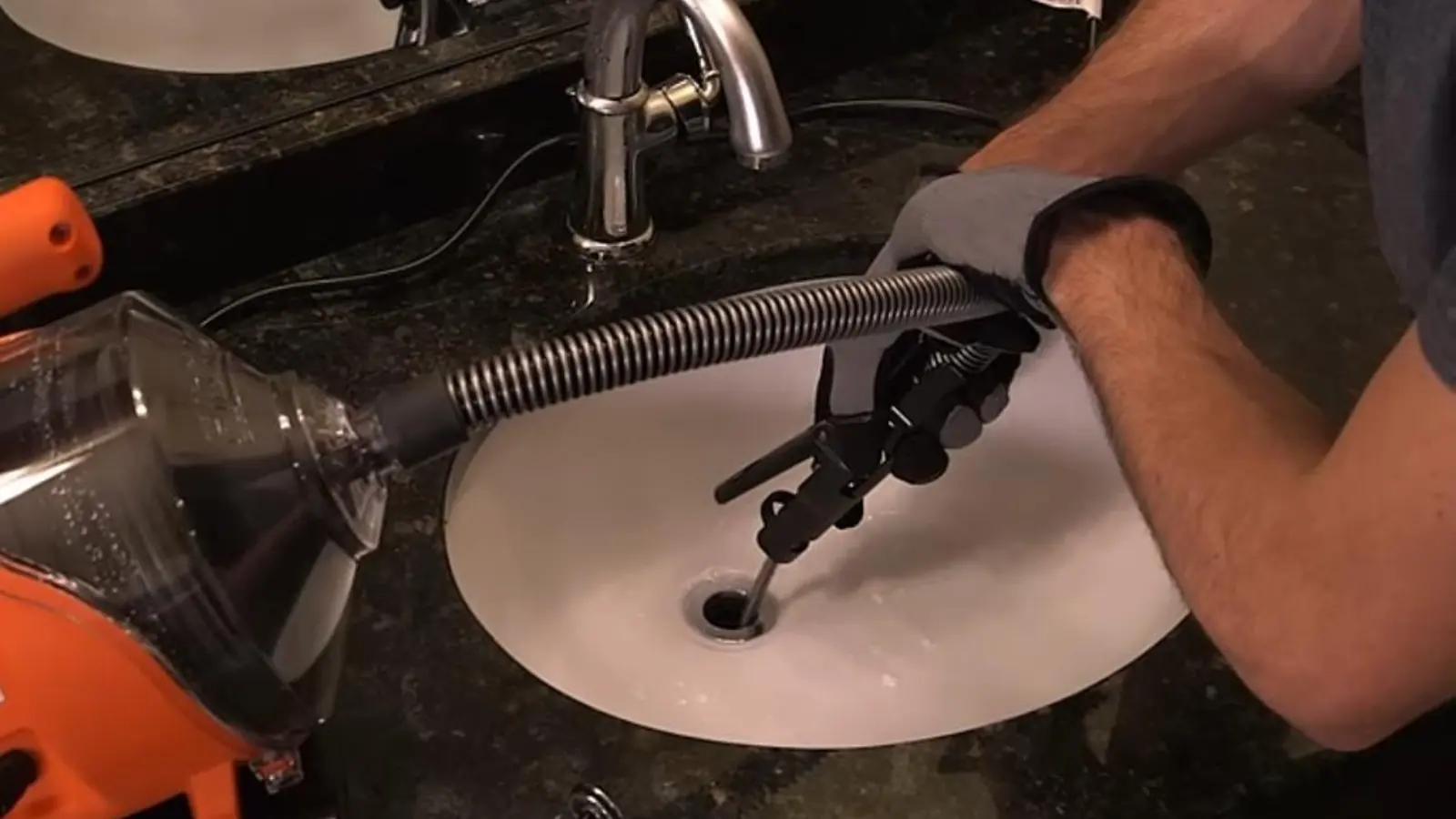
What Baking Soda and Vinegar Actually Do in a Drain
Baking soda is a mild alkali and vinegar is a mild acid. Mixed together they foam, then neutralize each other into water, a little salt and carbon dioxide. The foam can dislodge a light film on the pipe wall, and the hot water you rinse with does a lot of the real work.
That is the full story. The mixture does not dissolve hair, does not cut through a solid plug of grease, and does not break up a clump of paper or wipes. If your sink is draining slowly but is not fully stopped, it may help a little. If water is standing in the basin, it will not.
Baking Soda Fizz vs Mechanical Clearing
Here is a fair comparison of the two approaches for a typical sink problem.
Baking soda and vinegar
- Safe for pipes and skin.
- Cheap and already in the kitchen.
- Helps with mild odor and light film.
- Does not remove hair or solid plugs.
- Gives false hope on a full clog.
Plunger, hand snake or jetting
- Removes the blockage itself.
- Works on hair, grease and paper.
- Needs a little technique.
- A plunger is reusable and cheap.
- Hydro jetting also scours the pipe wall.
Fizz did nothing?
A drain that stays slow after the kitchen remedy usually has a deeper clog. Call and we will say what to try next.
How to Use the Fizz Method Properly
If the drain is slow, not stopped, this is a reasonable first attempt. It takes fifteen minutes.
Clear the standing water
Bail out any water in the basin. The mixture needs to reach the pipe, not sit in a pool.
Add baking soda
Pour about half a cup into the drain and push it down with a spoon.
Add vinegar and cover
Pour in about a cup of vinegar, then cover the drain with a stopper so the foam works down, not up.
Wait, then flush with hot water
Leave it for ten to fifteen minutes. Rinse with a kettle of very hot, not boiling, water if you have PVC or plastic traps.
Test the flow
Run the tap for a minute. If the drain still crawls, stop repeating the fizz and move to a plunger or snake.
Why Drains Fight Back in Older Homes
Many slow drains are not caused by one clog. They are the result of a narrowed pipe. Soap reacts with minerals in hard water and leaves a gray scum that sticks to the pipe wall, and every day it catches a little more hair and grease.
Older drain lines make this worse. Galvanized steel and cast iron both rust and flake on the inside, so the surface is rough and holds debris. A baking soda treatment passes right over this kind of buildup.
When the same sink slows down every few weeks, the buildup is probably well past the trap. A professional drain cleaning visit clears the line and tells you what condition it is in.
Which Fix Fits Which Drain Problem
Match the symptom to the tool. Starting with the right one saves time and avoids harsh chemicals.
| Symptom | Likely cause | Try first | Escalate when |
|---|---|---|---|
| Slow bathroom sink. | Hair and soap at the stopper and trap. | Lift the stopper, clear hair by hand, rinse. | Still slow after cleaning the trap. |
| Kitchen sink gurgles and drains slowly. | Grease and food in the trap or branch. | Plunger with the other side blocked. | Water backs into the other basin. |
| Smelly drain, drains fine. | Biofilm or a dry trap. | Baking soda and vinegar, then hot water. | Smell remains after cleaning. |
| Standing water in the basin. | A blockage in the trap or the branch. | Plunger or small hand snake. | Snake meets a hard stop or returns with debris. |
| Several fixtures slow together. | Main line problem. | Stop using water. | Call right away. |
For long runs of grease and scale, a professional can use hydro jetting, which clears the pipe wall more thoroughly than a cable can.
Never combine baking soda and vinegar with a commercial drain opener, and never mix different openers together. Some combinations release toxic gas. Chemical openers also sit in a stopped drain and can burn skin if the sink overflows or splashes.
If you already poured a chemical opener, tell the plumber when you call. It is a hazard for whoever opens the trap afterward, and we will wear protection and handle the line accordingly.
Hawthorne Water and Housing Change the Answer
The borough's water quality report lists hardness of roughly 236 to 278 ppm at several plants. That is hard water, and it is the reason soap scum builds so quickly in Hawthorne sinks. Rinsing a bathroom drain with hot water after use and cleaning the stopper monthly will do more for it than an occasional fizz.
About 60 percent of the borough's housing units were built before 1960. Many of those homes still have old steel or cast iron lines, and a drain that is narrowed by rust will clog again right after a quick fix. If hard water has you thinking about a softener, the borough's permit list includes water softeners, so ask the Building Department at 445 Lafayette Ave before the installation.
Signs the Problem Is Past Home Remedies
Call if more than one fixture is slow, if water backs up into a tub or floor drain when you run the sink, or if a plunger and snake make no difference. A recurring clog in the same sink is another sign that the cause is deeper than the trap.
A garbage disposal that hums but does not clear may be jammed and needs its own fix, and our garbage disposal service covers jams, leaks and replacements. We serve Ridgewood as well as Hawthorne, and a backed-up main line is treated as urgent any hour of the day.
Common Questions
Rarely. It can loosen a light film of grease and soap but cannot clear a solid plug. A plunger or a hand snake is the better first move for a slow or stopped kitchen sink.
Yes, in normal amounts. It will not harm metal or plastic drain lines. Boiling water is the thing to avoid on PVC or plastic traps, so use very hot tap water or a kettle that has cooled for a minute.
Once a month is plenty for odor and light film. Using it every day does not add benefit and can mask a clog that is getting worse. If the drain keeps slowing, move on to a mechanical fix.
Start with a cup plunger, then a hand snake or drain stick for bathroom sinks. Take the trap apart over a bucket if you can see the joint nuts. Skip chemical openers, especially if the drain is fully stopped.
The pipe may be narrowed by scale, rust or grease further down. Cleaning the trap fixes only the first few inches. A camera and a cable or jetting pass can reach the rest.
Hard water is a real factor here, since the borough's own report lists roughly 236 to 278 ppm at several plants. It leaves scale in pipes and scum on fixtures. A softener can reduce the buildup, but ask the Building Department about its permit rules first.
Local figures on this page come from the Hawthorne Water Department's 2026 Water Quality Report and U.S. Census Bureau American Community Survey estimates. Check current numbers with those sources before you rely on one.