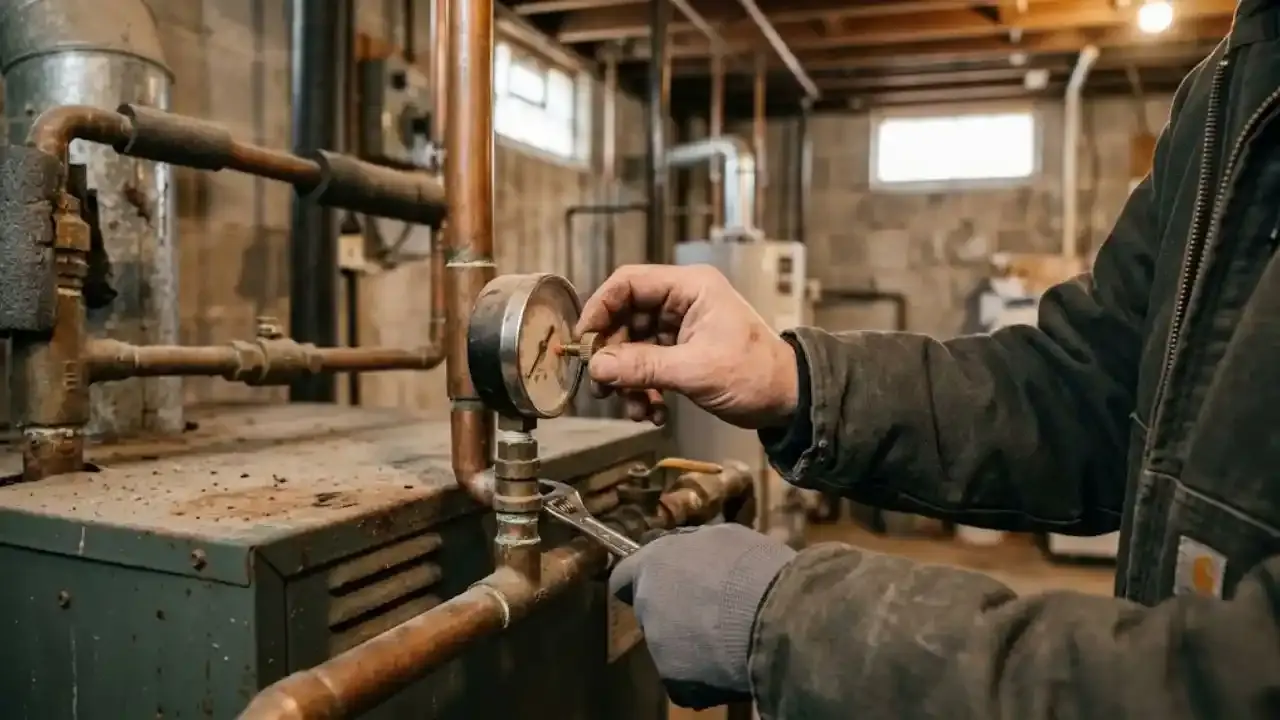
Gas Smell, Hissing or Hot Discharge: Do This First
A boiler holds hot water or steam under pressure and often burns gas or oil. Some warning signs call for leaving the house, not for a repair.
- If you smell gas, leave the building at once. Do not switch lights on or off, use a phone or light a flame inside. Call the gas utility or 911 from outside.
- If the carbon monoxide alarm sounds, get everyone outside into fresh air and call 911.
- If the safety valve is spraying steam or very hot water, stay away from the discharge pipe. Scalding can happen in seconds.
- If you can reach the emergency switch or the gas shutoff without going near the valve, turn the boiler off. If not, leave it alone and call.
- Do not cap, plug, tighten or hammer on a safety valve. A blocked valve defeats the only thing standing between a hot boiler and a rupture.
- Keep children and pets out of the boiler room until a licensed pro has cleared it.
No-heat and gas-smell calls are urgent in New Jersey winters, so use the 24/7 line if the house is cold or the system is unsafe.
What a Boiler Safety Valve Does
Every boiler has a relief valve set to open at a fixed pressure or temperature limit. Hot water boilers use a pressure relief valve, steam boilers use a steam safety valve, and many have a pipe running down to near the floor. That pipe directs discharge to a safe place.
The valve is a last line of defense. If the burner stays on, the water expands, or the expansion tank fails, pressure climbs. The valve opens to release it before the boiler shell can be damaged.
Valve dripping or hissing?
Keep clear of the discharge and call. Never cap or plug a relief valve, and leave the building if you smell gas.
Symptoms and What They Usually Mean
A valve that opens is a symptom, not a fault by itself. This table shows common patterns and a safe first response.
| What you see | Possible cause | Safe first step |
|---|---|---|
| Slow drip from the discharge pipe. | Worn valve seat or mineral buildup. | Place a bucket and call a pro. |
| Valve opens during every heating cycle. | Failed expansion tank or high fill pressure. | Turn down thermostat and call. |
| Steam or hot water spraying. | Overpressure or overheated boiler. | Leave the area and call from a safe place. |
| Gauge pressure keeps climbing. | Fill valve stuck open or tank problem. | Switch off the boiler if safe and call. |
| Rusty or crusted valve outlet. | Leakage over time. | Do not touch the lever, call a pro. |
| Gas smell near the boiler. | Gas leak | Leave the building and call the utility. |
Do not rely on a single symptom. A valve that weeps once after a cold start is different from one that discharges every day.
Common Reasons a Safety Valve Drips or Discharges
The valve seat can wear and let a small amount of water pass. Mineral scale from the water can hold the seat open slightly. In both cases the valve often needs replacing, and a replacement should match the boiler's rated pressure and capacity.
A drip can also point to a bigger problem. A waterlogged expansion tank, a faulty pressure-reducing fill valve or a failing aquastat can all push pressure above the limit. A new valve on top of one of these problems will simply leak again.
That is why a pro looks at the whole system and not only the valve. A repair that treats the valve alone is a stopgap, and a valve that opens repeatedly is a warning.
What You Can Do and What Needs a Licensed Pro
Some steps are safe for anyone to take. Others are not.
Safe for the homeowner
- Check the pressure gauge and note the reading.
- Place a bucket under the discharge pipe.
- Turn the thermostat down.
- Take a photo of the valve tag and boiler label for the plumber.
Leave to a licensed pro
- Replacing or testing the safety valve.
- Changing the pressure setting or the fill valve.
- Working on gas lines, burners or flue pipes.
- Replacing the boiler or the expansion tank.
Boiler Work, Permits and Winter in Hawthorne
Hawthorne gets roughly 30 to 40 inches of snow a year, so a boiler that fails in January is a real risk to the house and the pipes. The median Hawthorne home was built in 1953, and many older houses still run older heating equipment. If your boiler is the original or has been patched for years, ask a pro to check the safety valve and expansion tank before the heating season.
The Borough Building Department at 445 Lafayette Avenue issues plumbing permits under the New Jersey Uniform Construction Code, and its permit list includes a new furnace, boiler or water heater. Replacing the boiler itself needs a permit, while swapping a relief valve without rearranging piping is a smaller matter. Ask your contractor which applies and who pulls the permit.
The office is open Monday to Friday 8:30 to 4:30, and it does not issue permits after 3 PM. Plan any permit visit for the morning.
New Jersey allows plumbing work only by a licensed master plumber or authorized contractor, and the licence number must appear on vehicles, invoices and ads. You can check a licence at newjersey.mylicense.com/verification before anyone touches your boiler. Contractors also need Home Improvement Contractor registration. If a quote comes without a licence number, ask for it.
Questions to Ask Before Boiler Work Starts
A short list of questions protects you and your home.
- Is the contractor licensed and insured, and can they show the licence number?
- Will they test the valve, the expansion tank and the fill pressure, or only swap the valve?
- Does the work need a permit, and who pulls it?
- Will they give a clear price before work starts?
- What happens if the valve was only a symptom of a deeper fault?
- Will they check carbon monoxide and flue safety after the work?
For a boiler that is cold, leaking or unsafe, see our boiler repair service. If the boiler is near the end of its life and a new unit is the better choice, our water heater replacement team can talk through equipment and permit steps as well.
Routine Care That Reduces Valve Trouble
Have the boiler serviced every year by a licensed pro, ideally before the cold season. A service visit checks the valve, the burner, the flue and the expansion tank, and it is the best time to find small problems.
Keep the area around the boiler clear. Do not store boxes, paint or chemicals within reach of the burner. Make sure the discharge pipe runs freely down and is not blocked, capped or threaded at the end.
If you live in Wyckoff or North Haledon, you are a short drive from our Hawthorne base, and the same safety rules apply.
Common Questions
Place a bucket under the discharge pipe, turn down the thermostat, and call a licensed pro. Do not cap or plug the valve. If the leak turns into a spray or you smell gas, leave the area and call for help from outside.
No. The valve must match the boiler's rating and be installed by a licensed pro, and a wrong valve or a poor seal is dangerous. In New Jersey, plumbing work is limited to licensed master plumbers and authorized contractors.
A slow drip is urgent but not always a crisis. A valve that sprays hot water or steam, or that appears with a gas smell, is an emergency. In that case leave and call the gas utility or 911 from outside.
Common causes include a waterlogged expansion tank, a stuck fill valve or a boiler that is overheating. Each one needs a licensed pro to diagnose. Do not bleed or adjust the system beyond what your manual allows.
The borough's permit list includes a new furnace, boiler or water heater, so replacement needs a permit through the Building Department. Ask your contractor who will pull it and when the inspection happens.
Age alone is not a defect, but the median home here dates to 1953 and older heating gear is common. An annual service shows the safety valve, the expansion tank and the flue condition. Ask the pro to note the boiler's age on the report so you can plan ahead.
Local figures on this page come from U.S. Census Bureau American Community Survey estimates, the New Jersey Uniform Construction Code (N.J.A.C. 5:23) and the NJ State Board of Examiners of Master Plumbers. Check current numbers with those sources before you rely on one.