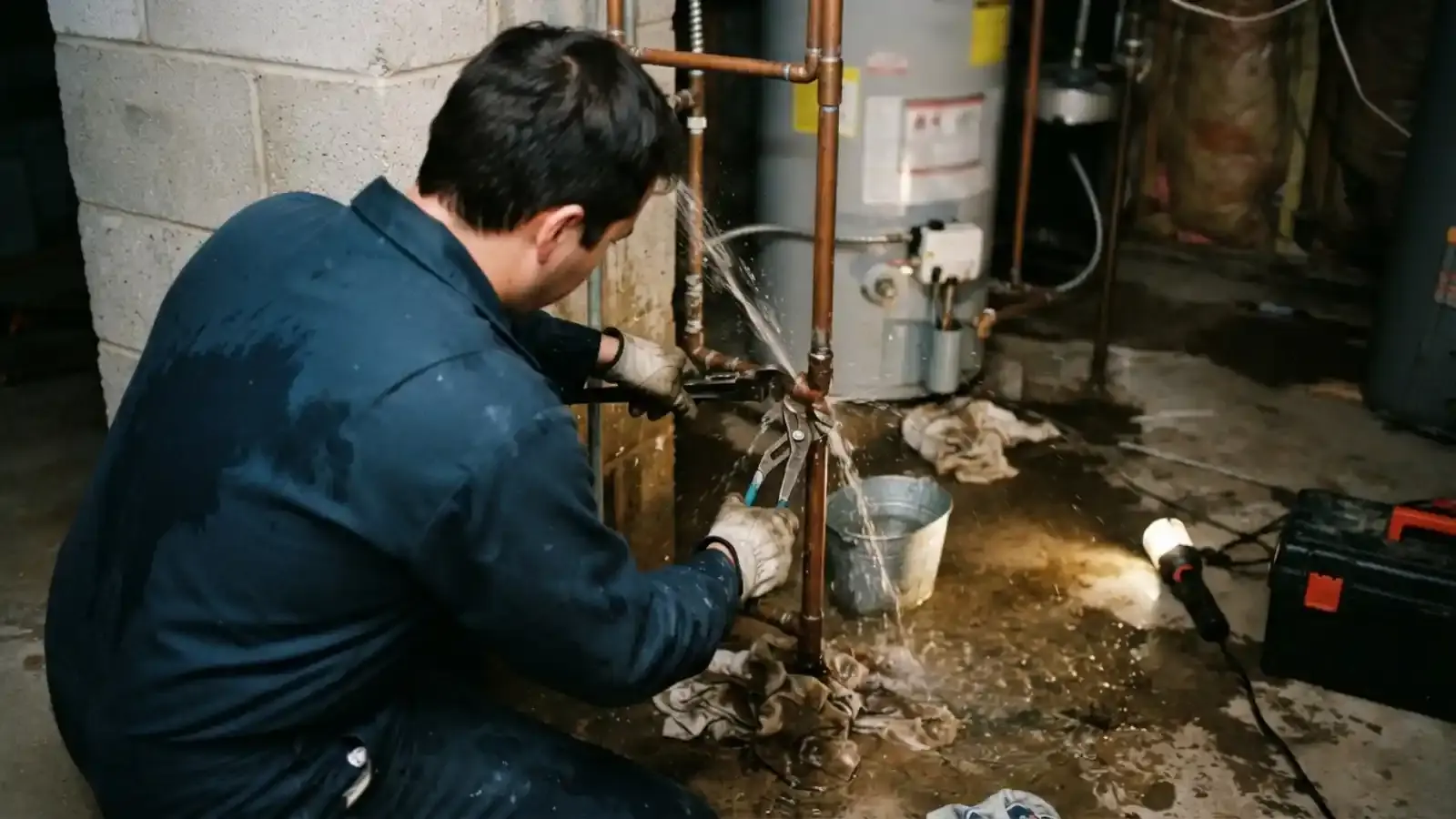
Pipe Broken? Do These Things in Order
Water damage grows by the minute, and a broken pressurized pipe can move a lot of water fast. Work through the list below and then call the 24/7 line.
- Close the main shut-off valve by turning it clockwise until it stops.
- Open the lowest faucet in the house to drain the lines and relieve pressure.
- If water is near outlets, appliances or the panel, do not step into it. Leave and shut off power only from a dry spot, or call the electric utility or 911.
- Move belongings off the floor and put a bucket under active drips.
- Take photos of the damage for your insurer before you clean up.
- Call us on the 24/7 line and say where the water is coming from.
If a pipe in the street or a hydrant is leaking, that is a borough matter and not a plumber's job. Skip the list and call the borough water emergency number, or 911.
Finding the Shut-Off Valve and the Curb Stop
The main shut-off valve is on the water line just inside the house, usually near the meter. Many older homes have a round gate valve that can stick, and it may take a firm steady turn. Walk the house once when nothing is wrong and tag the valve so anyone can find it in a hurry.
Outside, the curb stop is a second valve on the service line, sitting in a small box near the curb or the edge of the street. It usually needs a long key to turn. If the main valve inside is stuck or leaking, the curb stop is the next option, though in most towns it belongs to the water utility and you should not force it.
Pipe broken right now?
Shut off the main, open a low faucet and call. The 24/7 line is open and we will guide you through it.
Why Pipes Break
Freezing is the best known cause, because water expands as it turns to ice and splits the pipe wall. The break often shows up when the ice thaws and water starts flowing. Corrosion is the other big one, where old galvanized steel or thin copper wears from the inside until a pinhole opens.
Other causes include shifting ground, a hammer from a valve closing hard, and high water pressure that stresses old joints. Knowing the cause matters, because a freeze break in one spot is a different repair from a pipe that is failing all along its length.
Common Repair Types and When They Fit
The right fix depends on how much of the pipe is sound. This table shows how repairs are usually matched to the damage.
| Repair | Fits when | Limits |
|---|---|---|
| Cut out and replace a section. | A single split or pinhole in otherwise good pipe. | Needs access and fresh pipe that matches the existing material. |
| Coupling or press fitting. | A clean break in accessible copper or similar pipe. | Not suited to badly corroded pipe that will not hold a fitting. |
| Replace a longer run. | Several leaks along one stretch or heavy corrosion. | More open wall or ceiling work, and a higher bill. |
| Repipe | Pipe is failing throughout the house. | Largest job, usually planned and not an emergency fix. |
| Service line repair. | The break is between the meter or curb and the house. | May involve the borough and a trench. |
For leaks that are inside walls or under slabs, see our burst pipe repair page. Breaks on the line from the street are handled under water service line work.
Borough Shut-Off, Curb Stop and Who Owns What in Hawthorne
In Hawthorne, if you cannot close the valve at your house, the borough can shut the water off to the home for a fee. A leaking valve and the service pipe from the curb to the house are the owner's responsibility, so a break there is yours to fix. For a leaking hydrant or a main in the road, call the borough water department emergency line, or 911.
The borough is also replacing galvanized water service lines, with all of them due by June 30, 2031, and the borough pays for the main to the curb and the curb to the meter. Pipes inside the house stay the owner's job. If your house still has galvanized pipe, ask Public Works where your line stands, since galvanized pipe is a common place for a break to start.
What the Repair Visit Looks Like
Find the break
We trace the leak, open only the wall or floor we need, and check the pipe on both sides of the damage.
Repair and test
We replace the damaged section, restore water slowly and watch for leaks at every joint.
Cleanup advice
We tell you what to dry, what to throw out and when to call a water damage company or your insurer.
Wet drywall, insulation and carpet can grow mold in a short time. Run fans and a dehumidifier, and open the affected wall if the plumber has not already. Photograph everything before you remove it.
Ask your insurer what they need from the repair. We can describe the work in writing, though coverage decisions belong to the insurer.
Prevent the Next Break
Insulate pipes in unheated spaces and keep a slight drip on a vulnerable faucet during a hard freeze. Replace old shut-off valves that no longer close fully. If you want a second opinion on a leaking pipe near you, we also serve Glen Rock and the neighboring towns.
Common Questions
Close the main shut-off valve and open the lowest faucet to drain the lines. Then keep clear of water near electrical equipment and call a plumber.
It is usually where the water line enters the house, near the meter. In a basement it is often on the front wall. Find it before an emergency and tag it.
It is a valve on the service line near the curb, inside a small access box. It controls water to the house from outside. Treat it as the water utility's valve unless told otherwise.
Often yes, if the rest of the pipe is sound. A short section or a fitting can fix a single split. Repeated breaks point toward replacing a longer run.
That depends on the policy and the cause, such as sudden damage versus long-term wear. Call your insurer early and keep photos and receipts. We can describe the repair in writing for your claim.
The borough can shut the water off to your house for a fee. Call the borough water line and have your address ready. A leaking street main or hydrant is a 911 call or the borough water emergency line.