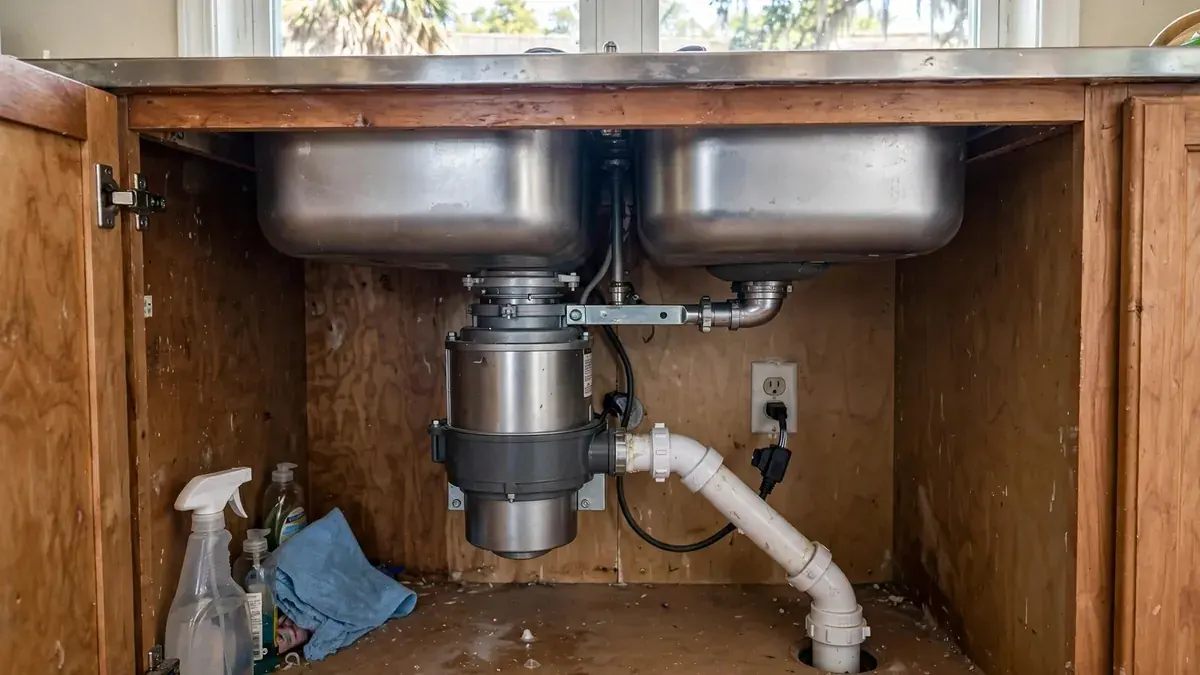
How a Double Kitchen Sink Drain Is Put Together
Each basin has a basket strainer that screws into the sink and connects to a tailpiece, a short vertical pipe. The two tailpieces drop down into a tee fitting, either side by side or with a continuous waste arm that runs from one basin to the other. From the tee, a single pipe goes to the trap.
The P-trap is the curved piece that holds a small plug of water. That water blocks sewer gas from rising through the drain. A trap arm then runs into the wall, where it joins the branch drain and a vent that lets air in behind the water so it flows without gurgling.
Everything above the trap arm is easy to reach. Everything inside the wall is not, which is why most repairs happen in the cabinet.
The Parts Under a Double Sink and What Each One Does
If you are replacing a faucet or a leaking joint, knowing the part names makes the job easier. This table lists what you will find in the cabinet.
| Part | Where it sits | What it does | Common failure |
|---|---|---|---|
| Basket strainer | In each basin hole. | Catches food and seals the sink to the drain. | Worn putty or gasket drips into the cabinet. |
| Tailpiece | Below each strainer. | Carries water down to the tee. | Loose slip nut leaks at the top. |
| Tee or waste arm. | Joins the two basins. | Merges both drains into one line. | Cracked or misaligned fitting. |
| P-trap | Below the tee. | Holds water to block sewer gas. | Slip nut leak or clog at the bottom. |
| Trap arm | Trap to wall. | Slopes toward the wall drain. | Poor slope causes slow drainage. |
| Dishwasher branch | On the tailpiece or disposal. | Accepts the dishwasher drain hose. | Hose without a high loop. |
| Vent | In the wall. | Lets air in so water drains smoothly. | Blocked vent causes gurgling. |
If any of these joints drip, check the slip nuts and washers first. A loose nut or a flattened washer is a ten minute fix, while a cracked fitting needs replacement.
Sink leaking under the cabinet?
Tell us what you see under there and we will say whether it is a trap, a connection or the dishwasher line.
How the Dishwasher Drain Connects
The dishwasher drains through a small corrugated hose, and how that hose is routed matters more than most people expect.
Raise the hose in a high loop
The hose should rise to the underside of the countertop before it drops to the connection. This keeps dirty sink water from flowing back into the dishwasher.
Connect above the trap
The hose attaches to a branch on the tailpiece or to the side of the garbage disposal, never directly to the trap.
Knock out the plug on a new disposal
A new disposal has a plug inside the dishwasher inlet. If it is not removed, the dishwasher cannot drain and water backs up.
Clamp it tight
A hose clamp keeps the connection from leaking. Check that the hose does not kink behind the cabinet.
Run a test cycle
Run a short cycle and watch the connection with a flashlight for drips.
If you run one basin and water shows up in the other, the clog is past the tee. Both basins share the same trap and the same drain, so a blockage anywhere after the tee affects both sides. A clog in only one tailpiece is rare.
A dishwasher that backs up into the sink is the same story. The drain hose empties into the shared line, so a clogged trap or branch gives the water nowhere to go.
Before You Replace or Add a Double Sink
These are the questions to answer before buying a new sink or hiring a plumber.
- Measure the cabinet opening and the distance between the two drain holes.
- Note whether the existing setup has a disposal and where the dishwasher hose attaches.
- Decide if the drain stays in the same spot. Moving it into a new wall is rearranging piping.
- Check that the shutoff valves under the faucet close fully, and plan to replace them if not.
- Look at the trap arm slope and the vent to confirm they can handle a second basin.
- Ask whether the work needs a permit before buying the sink.
A like-for-like swap in the same position is simple. Moving the sink or adding a basin where there was none is a different job.
Permits, Licensing and Older Kitchens in Hawthorne
Hawthorne's Building Department at 445 Lafayette Ave issues plumbing permits under the NJ Uniform Construction Code. The borough says replacing a faucet or valve does not need a permit when the piping is not rearranged. A new sink in the same spot is often in that category, but moving the drain or adding a bathroom does call for a permit, so call the office before you start.
New Jersey requires plumbing work to be done by a master plumber or an authorized contractor. You can check a licence at newjersey.mylicense.com/verification, and the licence number should appear on vehicles, invoices and ads. About one in four Hawthorne housing units is in a two-unit building, so a kitchen sink drain may share a stack with the apartment above or below. Tell your plumber if you share a drain, since a clog or leak can affect your neighbor.
When to Hire a Plumber for a Double Sink
Replace a basket strainer or a trap yourself if you are comfortable with slip nuts and have a bucket handy. Call a plumber when you find corrosion at the wall, a leaking joint inside the wall, a slow drain with no clog, or a vent that gurgles.
We handle new disposal installs, dishwasher hookups and trap repairs. Our garbage disposal service covers the disposal side, and a stubborn blockage past the trap is a job for drain cleaning. We also work with homeowners in North Haledon and the rest of the area, and the 24/7 line is open if a cabinet starts to flood.
Common Questions
Usually not. Both basins join at a tee and share one trap. Two traps are used in some setups, but a single trap with a tee is standard and easier to clean.
It connects to a branch on the disposal or the tailpiece, above the trap. It should not connect straight into the trap. A high loop in the hose helps prevent backflow.
Gurgling often means the vent is partly blocked or the trap arm lacks slope. It can also be a clog further along the drain. If the gurgle comes with slow drainage, call for a drain check.
You can if the drain location does not move and the cabinet fits. The tee, tailpieces and trap need to line up with the wall outlet. If the drain has to move, you are into permit and licensed plumber territory.
Check the slip nuts and washers first, and make sure the washer is seated with the beveled side facing the right way. Replace any cracked or flattened washers. If the leak is at the basket strainer, the putty or gasket needs replacing.
For a like-for-like faucet or valve replacement where the piping is not rearranged, the borough lists no permit requirement. Moving the sink, changing the drain or adding fixtures calls for a plumbing permit from the Building Department at 445 Lafayette Ave. Call them to confirm before you start.
Local figures on this page come from the New Jersey Uniform Construction Code (N.J.A.C. 5:23) and the NJ State Board of Examiners of Master Plumbers. Check current numbers with those sources before you rely on one.