How to Tell Your Pipes Need Replacing
Repiping is worth discussing when the same problems keep returning. Rusty or brown water, low pressure at several fixtures, repeated pinhole leaks and pipes that look flaky or green all point to age. One leak is a repair, but a pattern is a warning.
In an emergency, close the main shutoff and call our 24/7 line before the problem spreads.
Pipes We See and What Replaces Them
Different eras used different materials, and each fails in its own way.
Galvanized steel
Steel pipe with a zinc coating corrodes from the inside. It narrows over time, which cuts pressure, and it releases rust into the water.
Polybutylene
Gray or blue plastic pipe was used in some homes in later decades. If you find it, ask us to identify it, because fittings and age both matter.
Copper
Copper lasts a long time, but acidic water, hard water and high flow can wear thin spots that leak. Pinholes are a common sign.
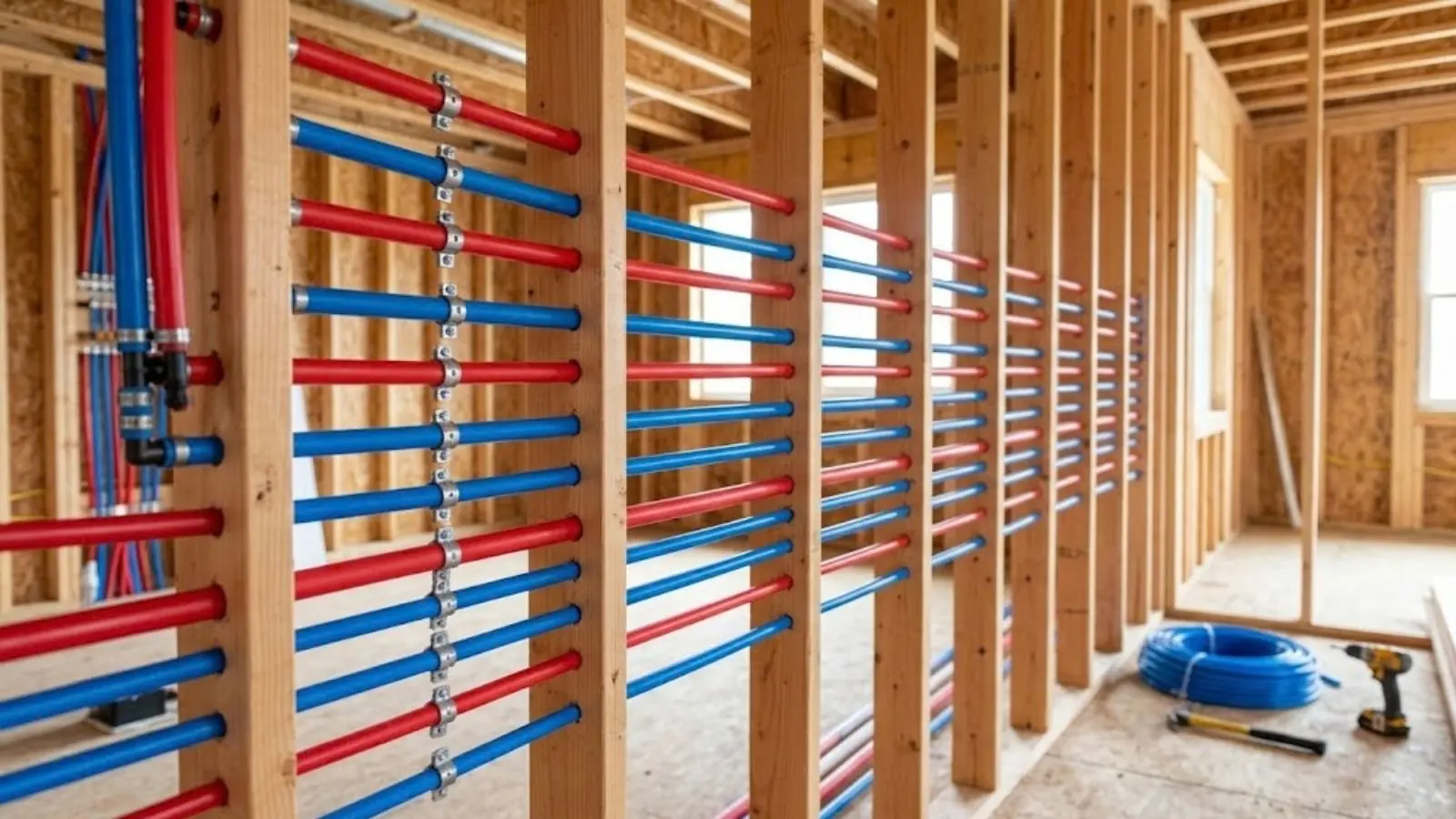
PEX
Flexible plastic that resists scale and can run through walls with fewer joints. It is a common choice for replacement.
Cast iron drains
Old drain stacks rust from the inside, crack and leak at the joints. We replace sections with new plastic or cast iron as needed.
PEX or Copper for Replacement
Both materials work. The best choice depends on the house, the water and your priorities.
PEX
- Flexible, so it routes through finished walls with less demo.
- Fewer fittings than rigid pipe.
- Resists scale buildup.
- Keep it out of direct sunlight and away from heat.
Copper
- Long record in older homes.
- Rigid and neat for exposed runs.
- Handles heat well.
- Takes more time to install and has more joints.
How a Repipe Is Done
We plan the work so you know the water shutoff times and the wall access points before we start.
Inspect and plan
We trace the existing lines, find shutoffs and choose routes that limit wall openings.
Install new lines
We run new supply pipes to every fixture, connect them at the main and pressure test.
Switch over and patch
We cut over, flush the lines, check every fixture and close the access openings.
Permit and inspection
The Borough Building Department issues the plumbing permit, and an inspection follows.
Walk through
We show you the shutoffs and what we replaced.
Phased Repiping in 1953-Era Homes
The median home in Hawthorne was built in 1953, and about 60 percent of the borough's housing units predate 1960. Those houses often have original galvanized supply pipe and cast iron or clay drains. Replacing everything at once is not always necessary or affordable.
A phased plan starts with the worst section, such as a leaking kitchen run or a clogged galvanized riser. It then continues to the bathrooms and the basement lines. Each phase leaves the house working, with the next one scheduled when you are ready.
Two-family houses can be done one unit at a time. We coordinate the shutoffs so the other unit keeps water between phases.
Permits and Licensing for Repiping
Repiping changes the plumbing, so ask the Borough Building Department at 445 Lafayette Avenue about the plumbing permit. It issues permits under the New Jersey Uniform Construction Code, open weekdays from 8:30 to 4:30, with no permits issued after 3 PM.
| Item | What to know | Your step |
|---|---|---|
| Plumbing permit | Repiping rearranges piping, so ask the office. | Confirm before work. |
| Licensed plumber | New Jersey requires a master plumber or authorized contractor. | Check the licence online. |
| Contractor registration | Contractors need a home improvement registration. | Ask for the number. |
| Inspection | Done by the borough after rough-in. | We schedule it. |
The State Board of Examiners of Master Plumbers lists licences online. The number must appear on vehicles and invoices.
Hard Water, Pressure and the Borough's Pipes
The borough is replacing galvanized water service lines by June 30, 2031. The borough pays from the main to the curb and from the curb to the meter, but the plumbing inside your house is yours. A new service line does not fix galvanized pipe inside the walls, so plan the two together.
Hawthorne's groundwater hardness, roughly 236 to 278 ppm at several plants, leaves scale in pipes. Scale narrows old pipe, which cuts pressure, and PEX resists it better. If pressure is low at every fixture, call the Borough Water Department first to rule out a street problem.
The borough's 2024 lead 90th percentile was 3.07 ppb, and copper was 0.095 ppm. Those numbers are for the system, not your home, so ask about testing if you worry about old solder or lead fittings.
What Repiping Costs
Repiping is priced by the job, not by the foot over the phone. We see the house, explain the options and give you a clear price before work starts.
Repiping is rarely covered unless a sudden failure caused damage. Ask your insurer what they need, and we can describe the work in writing.
Before You Decide
If you are not sure where a leak is, our leak detection service finds it without opening walls. For a burst pipe now, see burst pipe repair. We also serve homeowners in Ridgewood.
Common Questions
One leak with sound pipe around it is a repair. Repeated leaks, rusty water and low pressure at many fixtures point to a repipe. We inspect and tell you which fits.
Yes. We start with the worst section and schedule the rest as you are ready. Each phase leaves the house with working water.
It is not an emergency by itself, but it corrodes, narrows and eventually leaks. The borough is replacing galvanized service lines by 2031, and the pipe inside your house is yours to replace.
Gray or blue plastic supply pipe from some older homes has a record of failing at fittings. If you see it, ask us to identify it and advise on replacement.
Likely yes, because it rearranges or replaces piping. The Borough Building Department issues plumbing permits under the New Jersey Uniform Construction Code. We confirm the requirement before work.
Yes, for part of each work day. We plan shutoffs, restore water at night and work in phases if you want to keep the house livable.
Local figures on this page come from the Hawthorne Water Department's 2026 Water Quality Report, U.S. Census Bureau American Community Survey estimates, the New Jersey Uniform Construction Code (N.J.A.C. 5:23) and the NJ State Board of Examiners of Master Plumbers. Check current numbers with those sources before you rely on one.