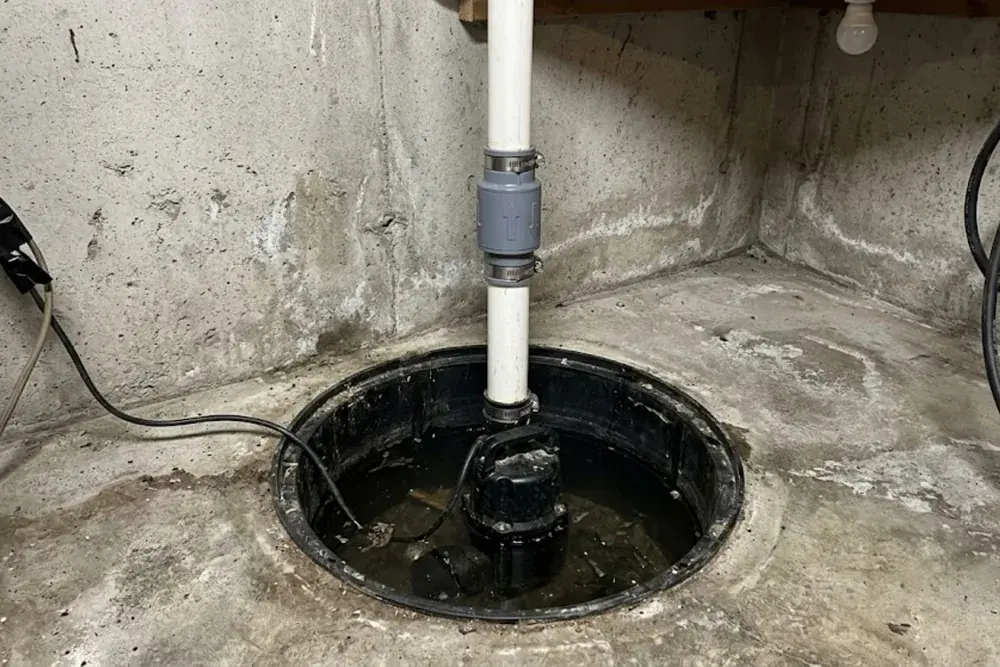
Basement Taking On Water? Do This First
Water in a basement is a damage problem and often an electrical one. Think about safety before you think about the pump.
- Do not enter a basement with standing water if the outlets, panel or appliances may be wet. Call the electric utility and 911 if it is deep.
- If the floor is dry and safe, check that the pump is plugged in and the breaker has not tripped. Lift the float to see whether it runs.
- If the pump runs but water does not leave, the discharge pipe may be frozen, blocked or disconnected outside.
- If sewage is mixed with the water or coming from a floor drain, keep everyone out and call us. Do not handle it without gloves and boots.
- Move valuables up and call the 24/7 line.
Tell us if the pump is old, if it has a battery backup, and whether water is rising. That sets the parts and the pump we load.
What Henri and Ida Taught Hawthorne Basements
The borough's environmental inventory records that Tropical Storm Henri on August 22, 2021 flooded Lafayette Avenue, Rea Avenue, Wagaraw Road, Grand Avenue and Goffle Road at North 8th Street. Ida followed on September 1, 2021 with 6.28 inches of rain, and Goffle Brook overflowed its bridges and paths in Goffle Brook Park.
The lesson for your pump is practical. A pump needs to keep up with storm volume, run on backup power when the grid fails, and discharge far enough from the foundation that the water does not return. If your home sits on or near those streets, plan for a stronger pump and a battery backup, not a minimum setup.
Why Sump Pumps Fail
Most failures in a storm are not mystery failures. They are parts we can find and fix.
Stuck float switch
Debris or a tilted pump keeps the float from rising. The pump never starts, and the basin overflows.
Worn motor
Old pumps burn out after years of cycling. A pump that runs constantly or hums is a warning.
Failed check valve
Without a working check valve, water in the pipe falls back into the basin and the pump cycles over and over.
Clogged intake
Silt or gravel in the basin chokes the pump and shortens its life.
Power loss
Storms often knock out power right when you need the pump. A battery backup covers that gap.
Undersized pump
A pump rated below your storm inflow can run flat out and still lose.
Getting the Water Away From the House
The discharge pipe carries pumped water outside, and many wet basements trace back to a bad one. It should run well away from the foundation, slope so it drains between cycles, and end where the water will not flow back toward the house. A pipe that is crushed, disconnected or frozen in winter will make a good pump useless.
Do not connect a discharge to the sanitary sewer or to a neighbor's property. Rules on what a sump may discharge to are the borough's to state, so ask Public Works before you tie into any drain. We can route the pipe to a safe point on your own lot.
Battery Backup Options
A second pump on its own power is the best protection when the grid goes out.
Battery backup pump
- Runs on a stored battery when the main pump or power fails.
- Needs a charger and a battery replaced on a schedule.
- Alarm warns you when the main pump stops.
- Best for storm-prone basements.
Primary pump only
- Lower cost and a simple setup.
- Fails when the power does.
- No second chance if the pump jams.
- Fine for low-risk basements, but risky in a flood area.
How We Install or Replace a Sump Pump
Inspect the basin and pipe
We check the pit, the float, the check valve and the discharge route.
Set the new pump
We set the pump on a level base, add a check valve and connect the discharge.
Test with water
We fill the basin, watch the pump cycle, and test the backup if one is fitted.
Pump Types and Where They Fit
Here is a short guide to the types we install.
| Type | Strength | Limit |
|---|---|---|
| Submersible | Quiet and sits in the basin. | Harder to reach for service. |
| Pedestal | Motor sits above the basin and is easy to service. | Louder and wears faster. |
| Battery backup | Runs when the power fails. | Needs battery care. |
| Combination system | Primary and backup in one basin. | Needs a basin large enough for both. |
If the wet basement is a long-term problem, our basement waterproofing page covers drainage that keeps water away from the walls. For broken or backed-up lines, see drain cleaning.
What Sump Pump Work Costs
A pump swap is quick when the basin and pipe are sound. A new basin or discharge route takes longer. You get a clear price before work starts.
If flooding has damaged your home, ask your insurer what they need to see. We can describe the work in writing, and the insurer decides coverage.
Storm Calls Beyond Hawthorne
Heavy rain brings pump calls from the whole area. Homeowners in Fair Lawn and nearby towns can reach the same 24/7 line, and we dispatch from Wagaraw Road.
Common Questions
Yes. The 24/7 line takes calls at night, on weekends and on holidays, and storm calls are common after dark. Tell us if water is rising so we can plan the trip.
The discharge pipe may be blocked, frozen or disconnected. A failed check valve can also let water run back into the basin. Both are quick to check.
If your basement floods in storms, yes. Storms often cut power, and a primary pump cannot run without it. The borough saw serious flooding in 2021, which is a good reason to plan for backup.
It should run away from the foundation and slope so it drains. Do not connect it to the sanitary sewer without checking with the borough. Public Works can tell you what rules apply.
A pump that runs constantly, hums without moving water or is rusty is near the end. If you do not know its age, we can inspect it and tell you whether to repair or replace.
It can be if it touches electrical outlets or if sewage mixes in. Stay out of a flooded basement until the power is off. Call the electric utility if the panel may be wet.
Local figures on this page come from the borough's Environmental Resource Inventory. Check current numbers with those sources before you rely on one.