Why the Time Varies So Much
A tankless install is not one task but five or six tied together. The plumber removes the old tank, mounts a wall unit, connects water, gas and venting, adds power, and tests the system. Each piece can be simple or complicated depending on what the house already has.
We do not promise a set number of hours because it would be a guess. A plumber who has seen the gas line, the vent path and the electrical panel can describe the job in stages and tell you which one is the unknown.
Plan for the water to be off for part of a working day, and for the permit and inspection to come after or around the physical work, not instead of it.
What Makes the Job Faster or Slower
These are the main variables a plumber looks at before giving a schedule.
| Factor | Quicker when | Slower when |
|---|---|---|
| Gas supply | Existing line is the right size. | Line must be upsized or rerouted. |
| Venting | A suitable vent path already exists. | New vent run through walls or roof. |
| Electrical | A nearby outlet or circuit is ready. | A new circuit is required. |
| Location | Same spot as the old tank. | Moved to another wall or floor. |
| Water lines | Pipes are sound and easy to reach. | Corroded or hard-to-reach piping. |
| Condensate drain | Floor drain close to the unit. | Drain must be extended. |
| Permit and inspection. | Paperwork ready and inspector available. | Delayed approval or re-inspection. |
A good schedule names the unknowns and says when each will be resolved.
Planning a tankless switch?
Call and describe your gas line, venting and current heater. We will tell you what usually affects the timeline.
The Stages of a Tankless Installation
Most jobs follow this order, with variations for the house.
Site check and planning
The plumber looks at the gas pipe size, vent route, electrical supply, water lines and wall space. Any gaps are listed before work starts.
Remove the tank and prepare the wall
The old heater is drained and disconnected, and the area is cleared. The wall is prepared for the mounting bracket, vent and drain.
Install, connect and vent
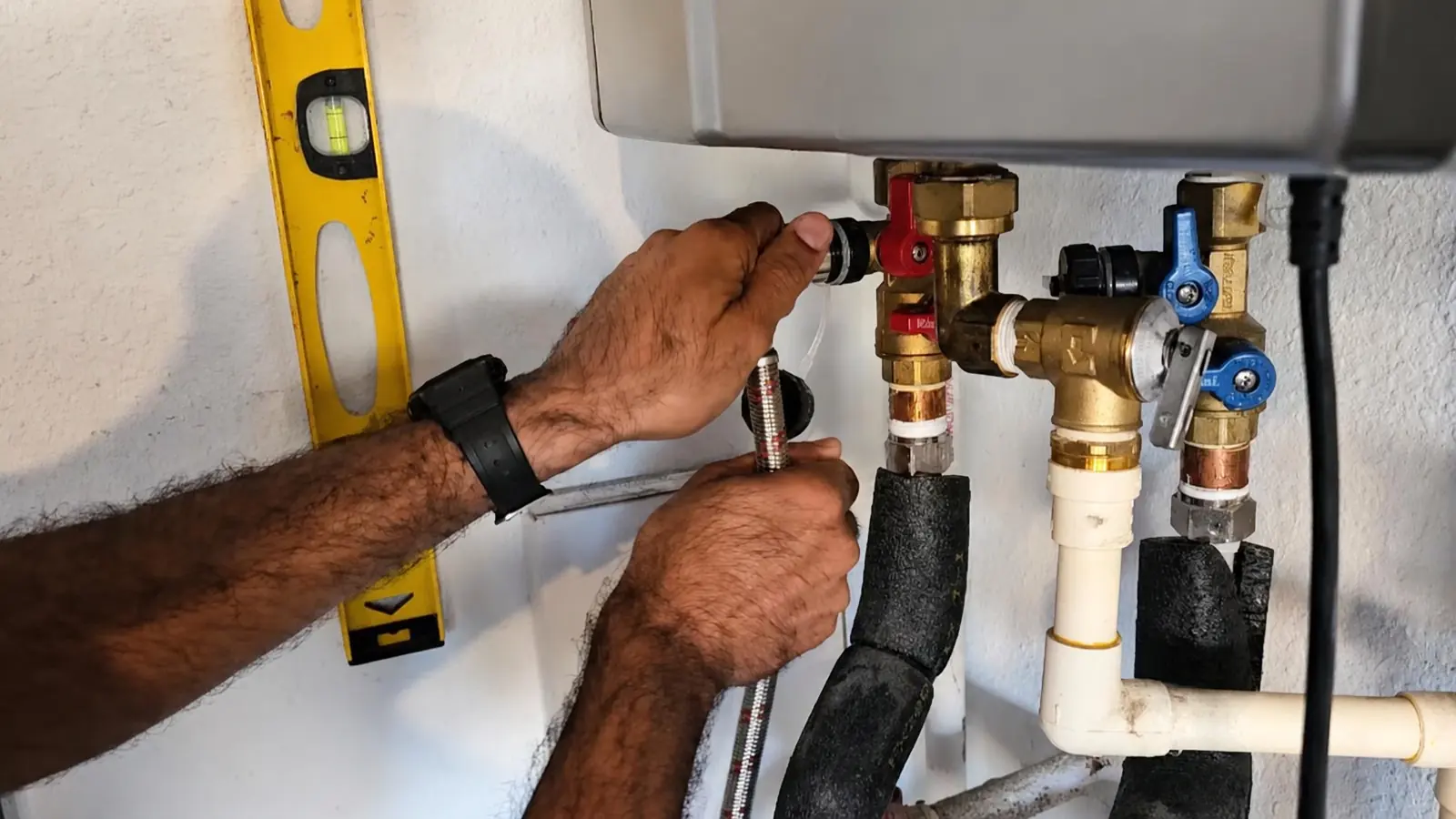
The unit is mounted, then water, gas, vent, condensate drain and power are connected. Isolation valves are added so the unit can be flushed later.
Test and commission
The plumber checks for gas and water leaks, tests combustion and ignition, sets the temperature and confirms flow at fixtures.
Inspection and handoff
Permit steps are completed and the inspector looks at the work. You get instructions for temperature, flushing and what to do if an error code appears.
Gas, Carbon Monoxide and Hot Water Safety
A tankless unit burns gas at a high rate and needs correct venting. These rules apply during and after the install.
- If you smell gas at any time, leave the building and call the gas utility or 911 from outside. Do not use a phone, switch or flame indoors.
- Do not restart a tankless unit that has shut itself off after an error code until a licensed pro checks it.
- Install carbon monoxide alarms near sleeping areas and test them regularly.
- Set the water heater temperature carefully if children or older adults live in the house. Hot water can scald quickly.
- Do not let anyone but a licensed pro touch gas lines or vent pipes.
If a unit you already own makes a rumbling sound, trips an error code or smells of exhaust, shut off the gas supply if it is safe to reach and call a pro.
Permits, Inspection and Hard Water in Hawthorne
The Borough Building Department at 445 Lafayette Avenue issues plumbing permits under the New Jersey Uniform Construction Code, and its list includes a new furnace, boiler or water heater. Under N.J.A.C. 5:23-2.17A(c)2, a like-capacity water heater replacement counts as minor work.
For minor work the code office is notified, the permit can be pulled after work starts, and an inspection is still required. A tankless conversion with new gas, venting or electrical may not qualify as like for like, so ask the department which route applies.
Plan around the office hours. The Building Department is open Monday to Friday 8:30 to 4:30 and does not issue permits after 3 PM, so a plumber who starts late in the day cannot pull a permit that afternoon. Ask who is pulling the permit and when the inspection happens.
Hawthorne water is hard. The borough's report lists roughly 236 to 278 ppm at several plants, which is about 14 to 16 grains per gallon by our own rough conversion.
Hard water leaves scale on a tankless heat exchanger, so ask about isolation valves for flushing and whether a softener makes sense. The borough permit list also names water softeners, so a softener added in the same job may need its own permit.
How to Prepare Your House
A little preparation keeps the timeline from stretching.
- Clear a path from the front door to the heater and the work wall.
- Move stored items away from the old tank and the new location.
- Make sure someone over 18 is home to approve changes and give access.
- Know where your main water shutoff and gas shutoff are.
- Plan for no hot water for part of the day and arrange showers beforehand.
- Ask about the permit, inspection and any required follow-up visits.
If you are comparing equipment, see our tankless water heater page. If you also want to know how a standard unit install compares, our water heater installation page covers it.
Any plumber who gives a firm time before seeing the gas line, vent path and panel is guessing. The hardest parts are usually hidden behind drywall or under a basement ceiling. Ask for a staged description of the job, and for the unknowns to be named.
Keeping the Unit Running
Flush a tankless unit on a schedule that suits your water. In a hard-water area, that may mean more often than the manual's minimum. Your installer can set a reminder and show you how to use the isolation valves.
Keep the area around the unit clear and the vent unobstructed. If an error code appears, write it down before you call, because it tells the plumber where to look.
Homeowners in North Haledon and Ridgewood ask us the same timeline questions, and the answer always starts with the house.
Common Questions
It depends on the gas supply, venting, electrical work and the permit and inspection steps. A replacement in the same spot with the right gas line and vent path goes faster than a conversion that needs new venting or a new circuit. Ask your plumber to describe the job in stages.
Yes, for part of the visit. The old heater is drained and removed, and the new one is connected and tested before hot water returns. Plan showers and laundry around that.
The borough's permit list includes a new furnace, boiler or water heater. A like-capacity replacement can be treated as minor work under the state rule, with notice to the code office and an inspection. A conversion with new gas, venting or electrical may need a regular permit, so check with the Building Department.
A tankless unit needs a vent made for its exhaust, and the route has to be safe and to code. If the old tank vent cannot be reused, a new path through a wall or roof has to be built. That adds both labor and inspection time.
Some can and some cannot. We do not promise a set time because hidden conditions change the job. A pre-install site check is the best way to find out what your house needs.
It can be. The borough's water report lists hardness around 236 to 278 ppm at several plants, which can build scale on the heat exchanger. Ask for isolation valves so the unit can be flushed, and ask whether a softener fits your plan.
Local figures on this page come from the Hawthorne Water Department's 2026 Water Quality Report and the New Jersey Uniform Construction Code (N.J.A.C. 5:23). Check current numbers with those sources before you rely on one.