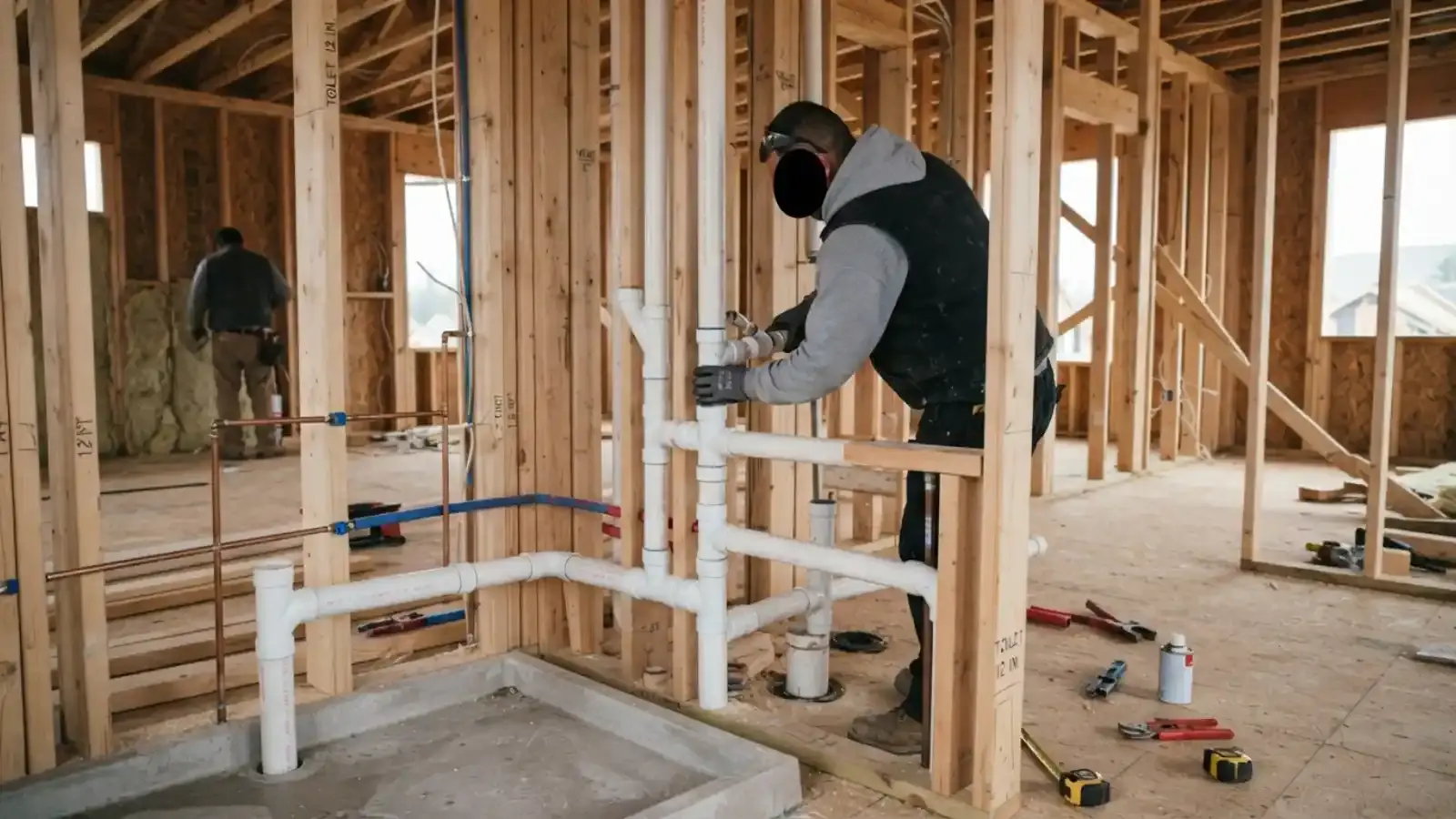
How a Plumbing Installation Goes
Good installs start before the first fitting. We want to know where the water and drain lines are before we promise anything.
Look at the space
We check supply lines, drain locations, venting and shutoffs where the new fixture will go.
Confirm the plan and permit
We tell you what the job needs, including whether the Borough Building Department must issue a permit.
Install and connect
We mount the fixture, connect supply and drain, and leave shutoffs you can reach.
Test and walk through
We run water, check for leaks and show you where the shutoffs are.
Inspection if required
When a permit is pulled, we coordinate the inspection with the borough.
Fixtures We Install
These are the fixtures we install most often. Each one has its own rough-in and drain needs.
Sinks and vanities
Pedestal, vanity and kitchen sinks. We connect faucets, supply lines and traps, and check cabinet fit.
Toilets
We set the new toilet on a fresh seal and check the flange. See our toilet repair page for older units.
Tubs and showers
We connect valves, drains and trim. Walls and tile stay with the right trade.
Kitchen fixtures
Faucets, disposals, dishwasher connections and pot fillers.
Laundry and utility
Washer boxes, utility sinks and hose bibs.
Bathroom and Kitchen Add-Ons
Adding a bathroom means new supply lines, drain and vent connections, and a permit. The Borough Building Department lists adding a bedroom or bathroom among the work that needs one. We tell you what the plumbing side involves, and the office confirms what else applies.
A half bath in a basement is a common project. It usually needs a drain below the sewer line, so an ejector pump may be required. We will look at the elevation before we promise a layout.
Kitchen add-ons such as a second sink or an island sink need vents and a clear drain path. Island plumbing is hard to do well, so we plan it first.
What We Install and What We Do Not
Plumbing installation is the water and drain side of a project. Other trades handle the rest.
We install
- Fixtures, faucets and valves.
- Supply lines and shutoffs.
- Drain, waste and vent connections.
- Disposals and dishwasher connections.
We do not do
- Electrical circuits or outlets.
- Tile, drywall and cabinets.
- Framing and carpentry.
- Appliance repair.
Which Installations Need a Permit
The Borough Building Department at 445 Lafayette Avenue issues plumbing permits under the New Jersey Uniform Construction Code. It is open weekdays from 8:30 to 4:30 and does not issue permits after 3 PM.
| Project | Permit | Notes |
|---|---|---|
| Adding a bathroom. | Yes, it is on the permit list. | Includes new supply, drain and vent. |
| New water heater or boiler. | Yes, per the permit list. | See our water heater pages. |
| Water softener | Listed by the borough. | Confirm with the office. |
| Like-for-like faucet or valve swap. | No, if piping is unchanged. | No rearranging |
| Moving a fixture. | Check with the office. | Piping changes usually matter. |
Plumbing in New Jersey must be done by a master plumber or authorized contractor. You can verify a licence online, and the number should appear on the vehicle and invoice.
What Plumbing Installation Costs
We give you a clear price before work starts. The fixture you choose and the condition of the existing pipe do most of the pricing.
Installation is a planned upgrade and is not normally an insurance claim. If an install follows storm damage, ask your insurer what they need.
What Hawthorne's Older Homes Mean for New Fixtures
Hawthorne's median home was built in 1953, so many new fixtures connect to old galvanized supply and cast iron drains. We check the pipe before we connect, because a new faucet on corroded pipe leaks at the joint. Where the old pipe is too far gone, we explain the option of a repiping project.
About 69 percent of homes are owner-occupied, and one in four housing units is in a two-unit building. In two-family houses, we confirm which unit's shutoffs and drains are affected before we start.
The borough's groundwater hardness, roughly 236 to 278 ppm at several plants, means new fixtures with aerators and cartridges will collect scale. Water softeners appear on the borough's permit list, so ask the building office if you plan one.
Planning Your Installation
Gather the fixture model, the room dimensions and any photos of the existing plumbing before you call. That lets us tell you what the job involves and what to expect. We also install water heaters, and our water heater installation page explains that work.
We work with homeowners in Fair Lawn too, and the 24/7 line is open for urgent leaks.
Common Questions
Yes. We install fixtures and connect supply and drain lines. Tile, drywall and electrical work stay with other trades, and we coordinate the schedule.
Yes. The Borough Building Department lists adding a bedroom or bathroom on its permit list. Call the office at 445 Lafayette Avenue to confirm what your project needs.
Often yes, but the drain may sit below the sewer line, which calls for an ejector pump. We look at the elevations and tell you what is possible before you commit.
Not when you replace a faucet or valve and do not rearrange the piping, according to the borough's permit list. Moving the fixture changes that, so ask the building office.
We do not do electrical wiring, tile, drywall, framing or appliance repair. We coordinate with those trades and handle the plumbing connections.
Installations are scheduled work, but our 24/7 line is open for leaks and other emergencies at any hour.
Local figures on this page come from the Hawthorne Water Department's 2026 Water Quality Report, U.S. Census Bureau American Community Survey estimates and the New Jersey Uniform Construction Code (N.J.A.C. 5:23). Check current numbers with those sources before you rely on one.