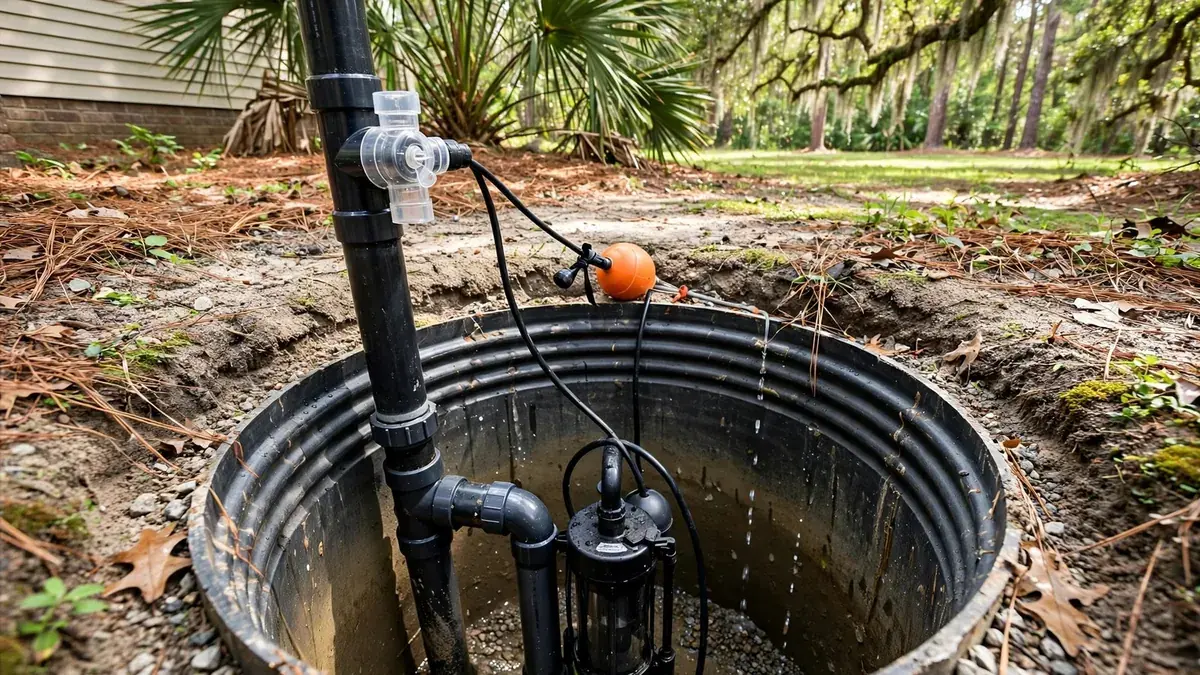
Signs the Discharge Pipe Is the Problem
If the pump runs but the pit keeps filling, the water may be going out and coming right back. Other signs are a loud knock when the pump shuts off, water spraying at a joint, or an outdoor outlet that stays dry while the pump runs. Any of these point away from the pump and toward the pipe or the check valve.
Start by watching one full cycle. Stand safely by the pit, never touch the pump or cord with wet hands or while standing in water, and note where the water leaves and whether it flows out cleanly.
Discharge Pipe Problems and Fixes
Most discharge failures fall into a handful of patterns. This table matches the symptom to the likely cause.
| Symptom | Likely cause | Typical fix |
|---|---|---|
| Pump runs, pit refills fast. | Check valve stuck open or missing, so water falls back. | Replace or install a check valve. |
| No water at the outside outlet. | Frozen line, clog or crushed pipe. | Thaw safely, clear the run and add slope. |
| Spray or drip at a joint. | Loose coupling or cracked fitting. | Replace the fitting and test under pressure. |
| Water pools at the outlet near the house. | Discharge ends too close to the foundation. | Extend the line and slope it away. |
| Hammering noise on shut-off. | Check valve slams as water drops back. | Install a quiet check valve. |
| Pump short cycles. | Backflow or restricted flow. | Check the valve, pipe size and float. |
For pump repair or replacement beyond the pipe, see our sump pump service page.
Sump discharge frozen or leaking?
Call before the next storm. We will check the pipe, the check valve and where the water ends up.
The Check Valve: A Small Part with a Big Job
A check valve lets water move one way, up and out, and blocks it from falling back into the pit when the pump stops. Without it, the pump lifts the same water again and again. That wears the motor and wastes the capacity you need in a storm.
Check valves wear out. Clogs from grit, a stuck flapper or a cracked body are common. Replacement is usually a short job, but it means cutting into the discharge pipe, so it is best done dry and before the rainy season.
Frozen Discharge Lines
In winter a discharge pipe that runs outside can freeze solid. The pump then has nowhere to send water, the pit fills, and the pump may burn out trying to push against ice. The problem tends to hit at the worst moment, because snowmelt and rain arrive when the line is still frozen.
Prevention is mostly slope and length. The pipe should pitch down toward the outlet so water drains out after each cycle instead of sitting. Keep the outdoor run short, and fit an outlet that opens when the line is blocked, so water can escape. Never pour boiling water on a frozen pipe or use an open flame, since either can crack the pipe or start a fire.
Henri, Ida and the Case for a Reliable Discharge Line in Hawthorne
The borough's environmental resource inventory records Tropical Storm Henri flooding Lafayette Avenue, Rea Avenue, Wagaraw Road, Grand Avenue and Goffle Road on August 22, 2021. Ida followed on September 1, 2021 with 6.28 inches of rain, and Goffle Brook overflowed its bridges and paths. If you live near those streets, test your pump and walk the discharge line before the season, because a blocked pipe during a storm like that is what turns a damp basement into a flooded one.
Winters add a second test, since Hawthorne gets about 30 to 40 inches of snow a year. Ask your plumber where your outlet drains and whether it can reach the yard without freezing. Also ask the Borough Building Department or Public Works before you connect a discharge to any drain, since where that water may go is a local rule we do not guess at.
Check Before the Next Storm
A short walk-through catches most problems before they cost you a basement.
- Pour a bucket of water into the pit and confirm the pump starts and the water leaves.
- Look at the outlet outside. It should be clear, sloped away from the house and free of leaves and ice.
- Listen for a thump after the pump stops, which can mean a weak check valve.
- Make sure the pump is on its own outlet, ideally a GFCI type.
- Test any battery backup according to its manual.
- Keep the area around the pit clear so you can reach it.
If any of these fail, call before the storm and not during it.
Water, Power and the Basement
A flooded basement with a running pump is an electrical hazard. If water is rising near outlets, the panel or the pump cord, stay out and have power shut off from a dry location, or call the electric utility. If you smell gas, leave the building and call the gas utility or 911 from outside.
Do not try to repair a discharge pipe while the pit is full and the pump is running. Wait for the water to go down, or call us.
When to Call
If your discharge line is the weak spot, our basement waterproofing team can also look at what is feeding the pit. We serve homes in North Haledon and other nearby towns, so call the 24/7 line if the pump is failing during a storm.
Common Questions
The check valve may be failing or missing, letting water flow back into the pit. The discharge pipe could also be blocked or frozen. Watch a full cycle and note where the water goes.
A loud thump after the pump stops is a hint. Water falling back into the pit and a pump that restarts quickly are others. A plumber can test it and replace it.
Do not use flame or boiling water. Turn the pump off to avoid burning it out and call for help. Plan a fix with better slope and an outlet that can release water.
Away from the foundation and onto ground that slopes away from the house. Do not assume it may go to a sewer or a neighbor's yard. Ask your local building or public works office.
Simple repairs like replacing a loose coupling are within reach for some homeowners, as long as the power is off and the pit is dry. Work near a full pit or live cord is not safe. When in doubt, call a plumber.
The borough's inventory lists Lafayette Avenue, Rea Avenue, Wagaraw Road, Grand Avenue and Goffle Road for Henri. Ida brought 6.28 inches of rain and Goffle Brook overflowed in Goffle Brook Park. If your home is near these, check your discharge line before the next heavy forecast.
Local figures on this page come from the borough's Environmental Resource Inventory. Check current numbers with those sources before you rely on one.