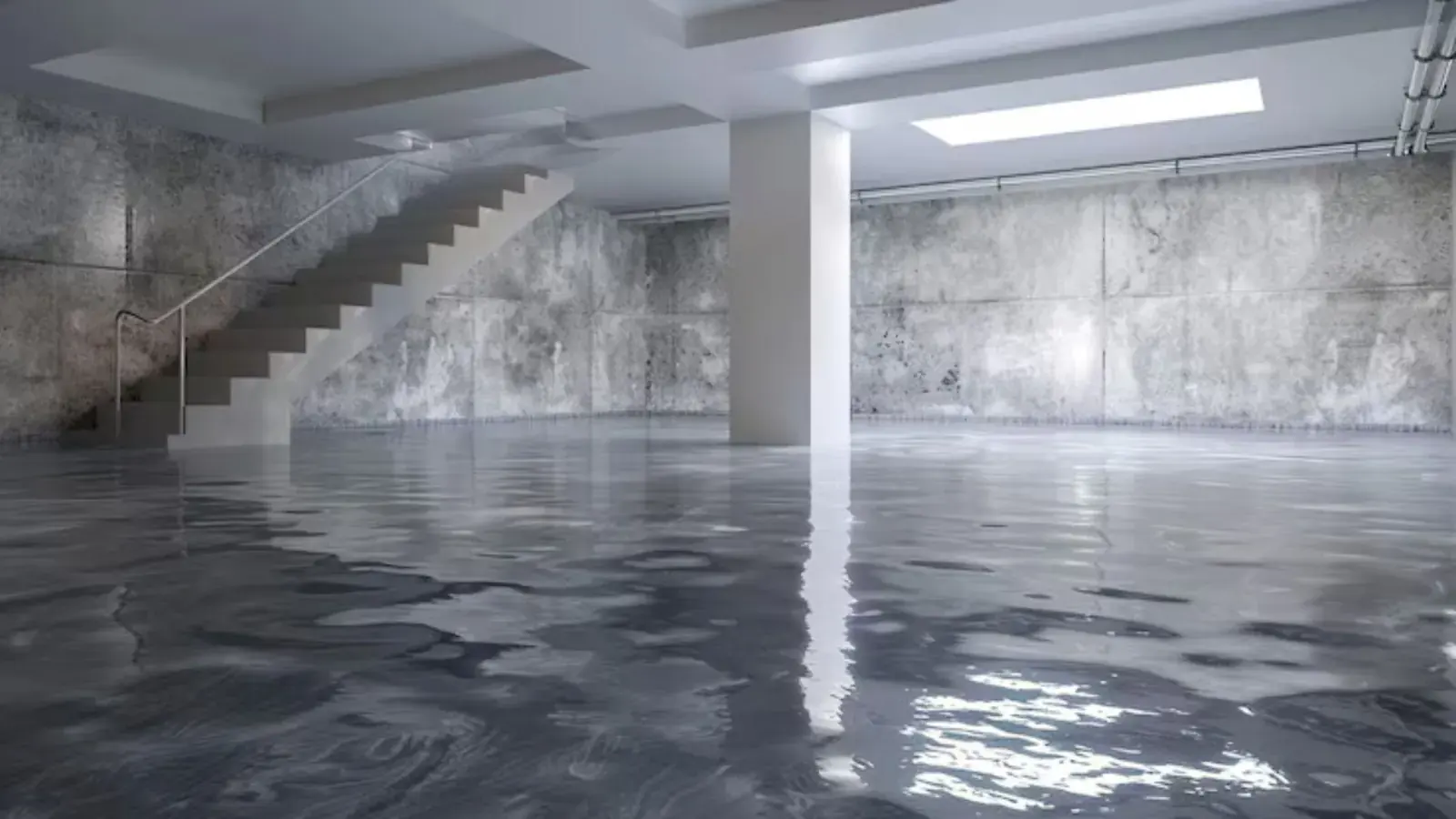
Why Old Basements Leak
Most older basements were built when the goal was a dry enough place for a furnace and coal, not a living space. Walls of stone, block or early poured concrete let moisture through, and floors were thin slabs with no drain beneath them. Over decades, gutters shift, grading settles and soil holds more water against the walls than the builders expected.
Water finds the weak points: the joint where the wall meets the floor, cracks, old pipe openings and porous block. A fix that ignores where the water is coming from tends to fail the next wet season.
Interior Drainage Versus Surface Sealing
These two ideas look similar but work in opposite ways. One manages water. The other tries to stop it at the surface.
Interior drainage and sump
- A drain channel runs along the footing under or beside the slab.
- Water that enters is collected and sent to a sump pit.
- A pump lifts it out and away from the house.
- Works on stone, block and poured walls.
- Does not depend on perfect bonding to the wall.
Surface sealers and paint
- Applied to the inside face of the wall.
- Can slow dampness and vapor in dry spells.
- Can peel when water pressure builds behind it.
- Cannot fix a crack that moves.
- Hides symptoms and can trap moisture.
Basement damp after every storm?
Call and describe where water enters. We will explain which fixes usually apply to older foundations.
How an Interior Drainage System Works
An interior system starts with a channel along the base of the walls, set below the level of the floor. Water that seeps through the wall or up at the joint drops into the channel and runs to a sump pit. A pump then lifts it out through a discharge pipe and away from the foundation.
The slab edge has to be opened to lay the channel, which is why this is a real construction job and not a quick patch. A dimple board or similar liner can carry wall seepage down to the channel so the wall stays damp, but the floor stays dry. The finished system is covered by new concrete, and the pit gets a sealed lid.
The Sump: The Part That Does the Work
A drain channel is only a path. The sump pit and pump are what move water out, and they need the same care as any machine. A good setup uses a check valve, a clear discharge line and a backup for when power fails during a storm.
Size matters. A pump that is too small keeps running without catching up, and one that is too big short cycles. Ask the installer how they chose the pump and where the discharge exits. Our post on discharge pipe problems covers the outside half of that system.
Why Hawthorne's Older Housing Is Prone to Wet Basements
Census estimates put Hawthorne's median home at 1953. Of the borough's 8,046 housing units, about 60.3 percent were built before 1960, 44.9 percent before 1950 and 34.3 percent in 1939 or earlier. If your house is in that group, expect older foundation materials and a floor that may have no drain beneath it, so ask any contractor to look at the wall and floor joints and not just paint them.
The borough's environmental inventory records flooding from Tropical Storm Henri on August 22, 2021 and Ida on September 1, 2021, with 6.28 inches of rain that day. Annual precipitation averages 50.23 inches at the nearest long record, and a basement that took water in those storms is a sign the site is wet. Ask the Borough Building Department at 445 Lafayette Avenue whether your plan needs a permit before work starts.
Fixes You Can Try Before Calling Anyone
Do these first. They cost little and sometimes solve the problem.
- Extend downspouts so roof water lands several feet from the wall.
- Clean gutters and check that they do not overflow at the corners.
- Regrade soil so it slopes away from the foundation.
- Seal small, dry hairline cracks with a product made for them.
- Run a dehumidifier to control humidity in damp weather.
- Raise stored items off the floor on shelves or pallets.
If the basement still takes water after these, the cause is probably below the surface. That is the time to bring in a professional.
Waterproof paint and masonry sealers can help with light dampness on a wall that is not under pressure. They cannot stop water that is pushing through a crack or up at the floor joint. When the wall fights back, the coating blisters and peels, and moisture is trapped behind it.
Hydraulic cement can plug a small active leak, but a crack that moves will reopen. Treat these products as a patch while you find the cause and not as a cure.
Wet Basements and Safety
Standing water in a basement can hide live wiring. If water is near outlets, the panel or appliances, stay out and have the power shut off from a dry spot, or call the electric utility or 911. If you smell gas, leave the building and call the gas utility from outside.
Sewage in a basement is a health hazard. Keep children and pets away, avoid contact, and call for help before cleanup.
Talking to a Plumber About It
Our basement waterproofing team starts with where the water enters and where it can go. The sump pump work comes next if a pit is needed. We also serve Wyckoff and nearby towns, and the 24/7 line is open if water is coming in now.
Common Questions
Paint can help with light dampness but not with water pushing through the wall. It tends to peel when pressure builds. Treat it as cosmetic.
It is a channel along the base of the walls that catches water and sends it to a sump pit. A pump then lifts it out. It works from the inside without digging up the yard.
Not always. Damp walls from humidity may need only drainage fixes outside and a dehumidifier. A pit and pump are for basements where water actually collects.
The soil is saturated and pushes water against the foundation. Gutters, grading and cracks all contribute. The pattern helps a plumber find the cause.
Persistent dampness can lead to mold and musty air. Dry it out and fix the source. If you see widespread mold, get it assessed.
Often, yes. Older walls of stone or block and floors with no underdrain respond better to interior drainage than to coatings. With the median home here built in 1953, ask any contractor how they will handle the wall and floor joint specifically.
Local figures on this page come from the borough's Environmental Resource Inventory and U.S. Census Bureau American Community Survey estimates. Check current numbers with those sources before you rely on one.